
Quick Answer
The most popular bridesmaid dress color combinations for 2026/2027 weddings are mismatched tonal palettes (three to four shades of the same color family, like dusty rose, mauve, and terracotta), jewel-tone pairings (emerald with sapphire, or plum with burgundy), and soft neutral blends (champagne, taupe, and sage). Two-tone combinations, such as sage green with ivory or dusty blue with blush, also remain a top choice for couples who want a coordinated but not matchy-matchy bridal party.
Why the “Perfect Match” Bridesmaid Look Is Fading
For a long time, the goal of bridesmaid dressing was uniformity: same color, same fabric, same silhouette, head to toe. That approach still has its place, but it’s no longer the default. As weddings for 2026 and 2027 take shape, more couples are treating their bridal party’s look less like a matching set and more like a curated color story — something that feels intentional, personal, and a little more like fashion styling than a dress code.
This shift matters for how you plan colors. Instead of asking “what single color should everyone wear,” the better question has become “what palette of colors will look cohesive across different skin tones, body types, and personal styles.” That’s a more flexible, more forgiving, and honestly more interesting way to approach it — and it’s exactly the trend driving demand for color-combination bridesmaid dresses over single-color sets.
The Bridesmaid Color Trends Defining 2026 and 2027
1. Tonal “Ombre” Palettes
Rather than picking one shade, tonal palettes use three or four dresses in the same color family but at different depths — for example, blush, dusty rose, mauve, and burgundy. When bridesmaids line up for photos, the effect reads as a soft gradient rather than a mismatch. This is one of the most requested looks for 2026 weddings because it photographs beautifully and flatters nearly every skin tone, since each bridesmaid can be assigned the shade that suits her best.
Best for: garden weddings, romantic or vintage themes, blush-and-gold color schemes.
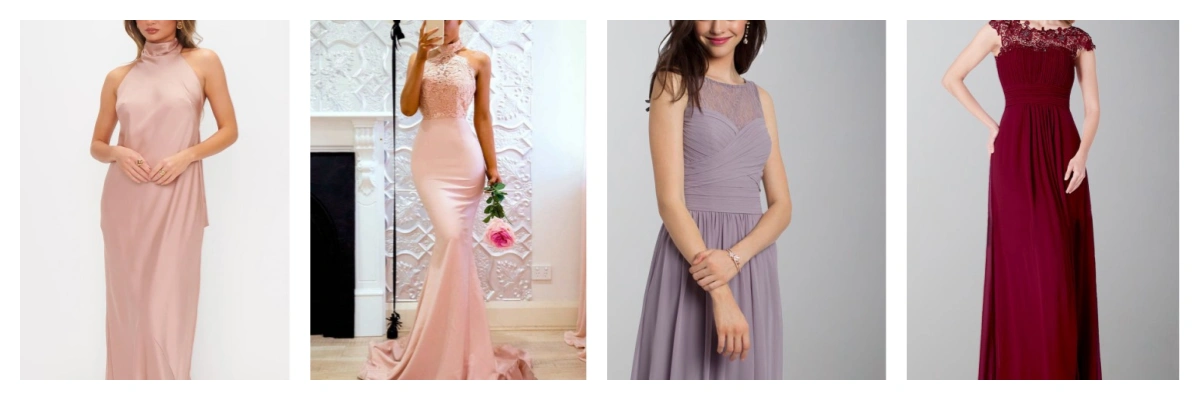
Order: blush bridesmaid dress / rose pink mermaid dress / mauve chiffon dress / burgundy bridesmaid dress
2. Jewel-Tone Duos
Deep, saturated colors are having a real moment for late 2026 into 2027, especially for autumn and winter weddings. Emerald paired with sapphire, or plum paired with burgundy, creates a rich, editorial look that works particularly well against candlelight and dark venue backdrops. Jewel tones also tend to photograph with more depth than pastels, which is part of why they’re gaining ground for evening receptions.
Best for: black-tie or formal weddings, autumn/winter dates, ballroom or historic venues.
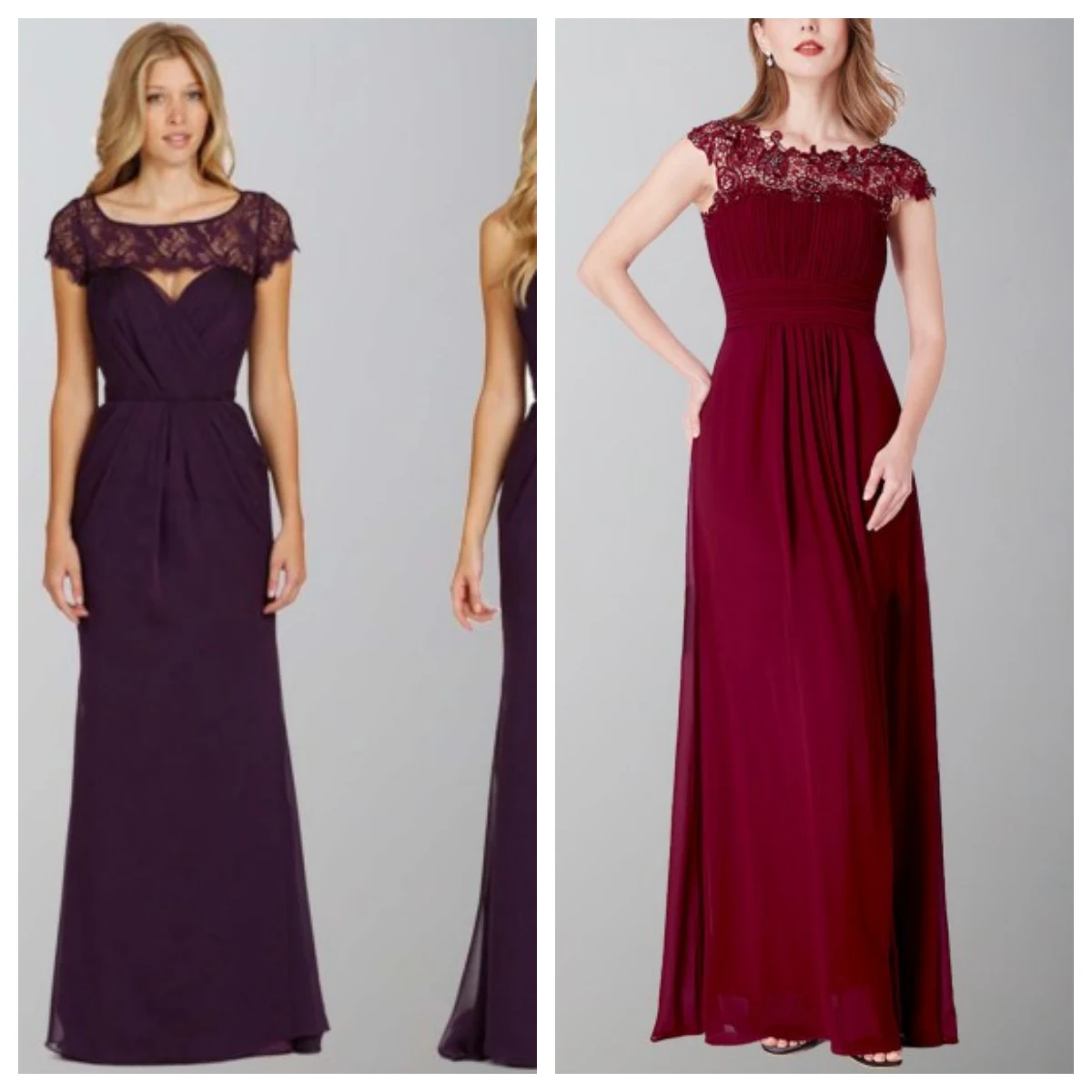
Shop: Plum chiffon convertible bridesmaid dress / burgundy bridesmaid dress with cap sleeves
3. Earthy Neutral Blends
Champagne, taupe, sage, and soft caramel are being combined into layered neutral palettes that feel elevated without being flashy. This combination has grown in popularity alongside the broader “quiet luxury” aesthetic in bridal fashion, and it pairs naturally with greenery-heavy florals and neutral linens.
Best for: minimalist weddings, barn or countryside venues, couples who want longevity (these dresses are genuinely re-wearable afterward).
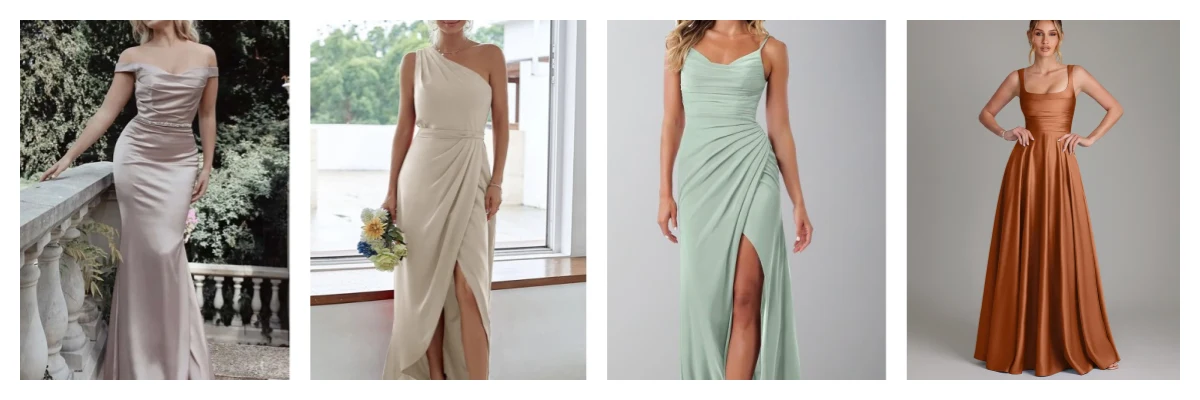
Shop: champagne mermaid dress / taupe wrapped dress/ sage pleated bridesmaid dress / soft caramel dress
4. Two-Tone Pairings
Rather than a full palette, some couples are choosing just two complementary colors and splitting the bridal party between them — sage green and ivory, or dusty blue and blush. This is a simpler way to get visual interest without the complexity of coordinating four or five shades, and it works well for smaller bridal parties.
Best for: small bridal parties (2–4 bridesmaids), coastal or spring weddings.
5. Unexpected Contrast Pairings
A newer trend for 2027 is intentional contrast: pairing a warm tone with a cool tone, like terracotta with dusty blue, or mustard with plum. This is a bolder choice, but it creates striking photos and works especially well for couples with a more eclectic or artistic wedding style.
Best for: fall weddings, boho or eclectic themes, couples wanting a distinctive look.
Bridesmaid Color Combination Comparison Chart
| Combination Style | Example Palette | Best Season | Best Venue Type | Skin-Tone Flexibility |
|---|---|---|---|---|
| Tonal / Ombre | Blush, dusty rose, mauve, burgundy | Spring–Fall | Garden, outdoor | High |
| Jewel-Tone Duo | Emerald + sapphire | Fall–Winter | Ballroom, indoor formal | Medium–High |
| Earthy Neutral | Champagne, taupe, sage | Year-round | Barn, minimalist, coastal | High |
| Two-Tone | Sage green + ivory | Spring–Summer | Coastal, garden | Medium |
| Contrast Pairing | Terracotta + dusty blue | Fall | Boho, eclectic | Mediu |
How to Choose the Right Combination for Your Wedding
Start with your season, not your favorite color
A palette that looks stunning in photos from a June garden wedding can feel out of place in November. Jewel tones and earthy neutrals tend to suit fall and winter dates, while tonal pastels and two-tone pairings lean more naturally toward spring and summer.
[Continue to read: Perfect Bridesmaid Dress Colors for Spring Wedding ]
Consider your venue’s existing palette
If your venue has strong architectural colors — dark wood, stone, or heavily patterned wallpaper — a jewel-tone or neutral palette will usually integrate more smoothly than very bright or pastel tones. Bright, open, neutral-walled venues give you more freedom to introduce color.
[Check out our guide: Bridesmaid Dresses for Garden Weddings ]
Think about your bridal party’s skin tones
This is where combination palettes genuinely outperform single-color dressing. A single shade of, say, dusty rose won’t flatter every bridesmaid equally. A tonal palette lets you assign the deeper shade to someone it suits and the lighter shade to someone else, so everyone looks their best without sacrificing the coordinated look.
Decide how “matchy” you actually want it
Combination palettes exist on a spectrum. If you want subtle cohesion, stay within one color family (tonal). If you want more visual interest, go with a two-tone or contrast pairing. Neither approach is more “correct” — it depends on how bold you want the bridal party photos to feel.
Styling Tips for Mixing Colors Well
- Keep fabric consistent. Even with varied colors, using the same fabric (like satin or chiffon) across all dresses keeps the look cohesive.
- Repeat the palette elsewhere. Carry your bridesmaid colors into bouquets, table linens, or signage so the palette feels intentional rather than incidental.
- Limit the palette to 3–4 colors. Beyond that, the coordinated effect can start to look accidental rather than curated.
- Let silhouette do the unifying work. If colors vary, keeping a similar dress length or silhouette across the bridal party helps tie the look together.
- Order swatches before committing. Screen colors and fabric colors can differ meaningfully — always request physical swatches for any combination you’re considering.
Bridesmaid Dress Color Combination Frequently Asked Questions
Tonal palettes built around dusty rose, mauve, and terracotta are currently the most requested combination for 2026 weddings, largely because they photograph well and suit a wide range of skin tones.
Yes. Mismatched or coordinated-but-varied bridesmaid dresses have become one of the leading trends in bridal party styling, and they’re now considered just as polished as fully matching sets when the palette is chosen intentionally.
Most stylists recommend three to four colors within a single wedding. This gives enough variety to flatter different skin tones without making the bridal party look uncoordinated.
Jewel tones like emerald, sapphire, and plum, or earthy tones like terracotta and burnt orange, tend to suit fall weddings best, especially for evening or indoor receptions.
Ideally both. Start with your wedding’s overall color scheme, then adjust the specific shades to suit the season and venue lighting.
Bridesmaid Dress Color Combinations Final Thoughts
Choosing a bridesmaid color combination for a 2026 or 2027 wedding isn’t about picking a single “correct” shade anymore — it’s about building a small palette that works together across different people, seasons, and settings. Whether you lean into a soft tonal gradient, a bold jewel-tone duo, or a quiet neutral blend, the goal is the same: a bridal party that looks and feels like it belongs together in every photo.
If you’re ready to explore affordable bridesmaid dresses uk in coordinated color palettes, browse our current collection to find combinations that match your wedding’s season, venue, and style.
Peple Also Asked:
- How to Coordinate Mismatched Bridesmaid Dresses
- Sage Green Bridesmaid Dresses: Why This Trending Color Is Perfect for Every Wedding Style
- Bridesmaid Dresses: The Ultimate Style, Colour & Fit Guide (2026)
- How to Coordinate Bridesmaid Dresses by Color?
- Burgundy Wedding Color Combinations: Elegant Palettes for a Luxurious Celebration
