
Executive Summary: Learn how UK students can plan their prom budgets smartly. From setting a total spending limit to allocating funds for dress, accessories and extras, this guide breaks down typical UK prom costs. It reveals hidden expenses (alterations, tickets, etc.) and offers money-saving tips. With example budgets (£350–500, £500–700, £700–1000+), charts and a printable checklist, you’ll avoid surprises and enjoy prom on budget.
Why You Need a Prom Budget
Answer: Prom costs can add up quickly. Surveys show 40% of UK parents expect to spend £250–£500 on prom1, with 10% spending over £500. Without a clear budget, it’s easy to overspend on trendy extras. Setting a budget upfront helps prioritize essentials (like dress fitting) and avoids last-minute debt or stress.
Prom costs add up quickly, and without a clear budget it’s easy to overspend on trendy extras. Setting a number upfront helps you prioritise essentials — like proper dress fitting — and avoids last-minute stress or debt.
Defining how much you can spend steers every shopping decision that follows. A budget prevents impulse buys and reveals early whether your expectations exceed what you can actually afford, so you can adjust before you’re committed.
Step 1: Set Your Total Prom Budget
Answer: In the UK, prom budgets typically range £350–£800+. One report found UK parents spend £500–£1,000 per student on prom2, but with savvy planning costs can stay under £3502.
UK prom budgets typically range £350–£800+. Choose a realistic range based on your family’s finances:
- Tight budget: £350–£500 — stick to essentials
- Mid-range: £500–£700 — more freedom on dress and styling
- High budget: £700–£1,000+ — open to luxury extras
If you’re unsure, start at the lower end and increase only if needed. For the full breakdown of what everything actually costs, see How Much Does Prom Cost UK?
Step 2: Split Your Budget by Category
Answer: Allocate about 40–50% of your total budget to the dress, 10–20% to accessories, 10–20% to hair & makeup, 5–10% to transport, and the rest to tickets and extras. For instance, in a £600 budget, roughly £250–£300 goes on the dress3.
Step 2: Split Your Budget by Category
A typical allocation looks like:
- Dress: 40–50% of total (the biggest expense)
- Accessories: 10–20% (shoes, jewellery, clutch)
- Hair & Makeup: 10–20% (salon or DIY products)
- Transport: 5–10% (taxi, mini-bus, or a shared limo)
- Extras: the remainder (tickets, corsage, emergency kit)
Example Budget Scenarios
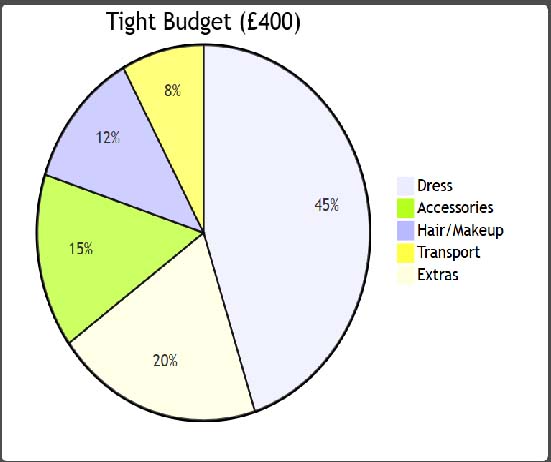
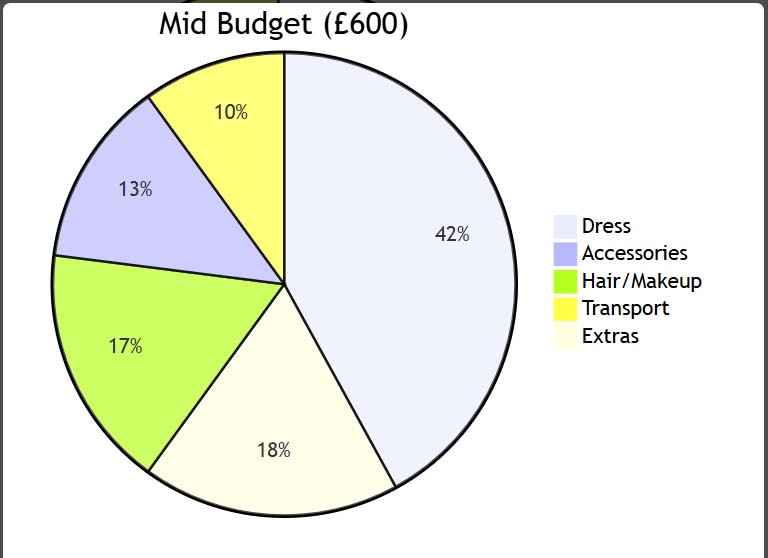
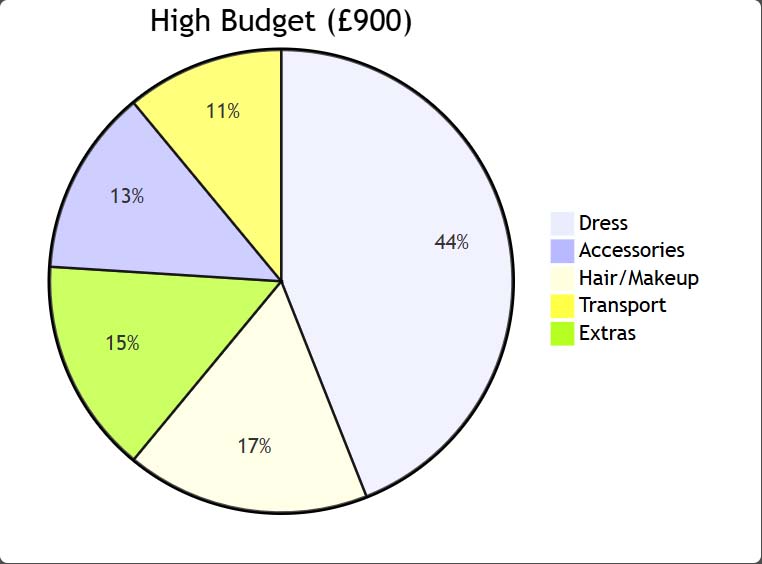
| Category | £400 (Tight) | £600 (Mid) | £900 (High) |
|---|---|---|---|
| Dress | £180 (45%) | £250 (42%) | £400 (44%) |
| Accessories | £60 (15%) | £80 (13%) | £120 (13%) |
| Hair/Makeup | £50 (12%) | £100 (17%) | £150 (17%) |
| Transport | £30 (8%) | £60 (10%) | £100 (11%) |
| Extras | £80 (20%) | £110 (18%) | £130 (15%) |
| Total | £400 | £600 | £900 |
Step 3: Spend Smart: Prioritize What Matters
Answer: The dress and its fit should take the largest share4. A well-fitting £200 dress looks better than an ill-fitting £500 one. Ensure your dress budget is enough to cover necessary alterations (many require tailoring). Allocate more to comfort and confidence.
The dress and its fit should take the largest share. A well-fitting £200 dress looks better than an ill-fitting £500 one — make sure your dress budget covers necessary alterations, not just the sticker price.
- Fit & quality: spend enough on a dress you love and that fits well — fabric quality matters more than most people expect.
- Comfortable shoes: a little extra on supportive heels saves real pain across hours of dancing.
- Limit excess: skip trendy extras that won’t be noticed after the first hour or two of photos.
Step 4: Set Aside a Contingency Fund
Answer: Always set aside about £80–£250 for miscellaneous fees. Common hidden costs include dress alterations, prom tickets, and speciality items6. Neglecting these can blow your budget.
Set aside roughly £80–£250 on top of your planned categories for the things that don’t fit neatly into “dress” or “accessories” — a last-minute alteration tweak, a forgotten emergency kit item, or a small fee you didn’t plan for. For a full breakdown of exactly what those hidden costs tend to be (alterations, shipping and customs, undergarments, and more), see How Much Does Prom Cost UK?
Step 5: Track Every Penny
Answer: Keep a real-time budget tracker (spreadsheet or app). Log each spend under its category to see where you stand.
Keep a real-time budget tracker — a spreadsheet or app works fine. Log each spend under its category as you go, not after the fact.
- Budgeted vs. spent: a simple two-column layout per category, updated immediately after each purchase.
- Save your receipts (or photograph them) so you can adjust your plan if one category overshoots.
- Review regularly: if accessories are running over, pull back on extras rather than discovering the gap at checkout.
Prom Budget Checklist
| Task | Done (✓) |
|---|---|
| Set a total spending limit | [ ] |
| Allocate budget to dress, etc. | [ ] |
| Choose and buy prom dress | [ ] |
| Book dress alterations | [ ] |
| Buy shoes & essential accessories | [ ] |
| Schedule hair & makeup services | [ ] |
| Plan transport (taxi/limo/friends) | [ ] |
| Set aside contingency fund | [ ] |
| Track all expenses vs. budget | [ ] |
Printable: Check off each task as you complete it to stay on track.
FAQs About Prom Budget UK
UK prom budgets typically run £350–£800+, though it varies by family. Set your number based on what you can genuinely afford, not what you hear other families are spending.
Prom dresses are typically the largest expense4. A well-fitting dress and necessary alterations often take about half of the total budget. Next largest costs are usually hair/makeup and accessories. Focus most spending on fit and comfort (dress and shoes) rather than trendy add-ons.
Shop early and on sale for the best deals.
DIY your hair and makeup, or split stylist costs with friends8.
Reuse or borrow accessories from friends or reuse a formal you already own.
Share transport costs or use cheaper options like trains/taxis.
Consider rentals for designer dresses (prom dress hire).
By prioritising spending on key items and minimizing extras, you can stay chic on a budget1
A common allocation is roughly 40–50% on the dress, 10–20% on accessories, 10–20% on hair and makeup, 5–10% on transport, with the remainder covering tickets and extras — adjust the percentages to fit what matters most to you.
Yes — £80–£250 on top of your category budget covers the things that don’t fit neatly anywhere else: a last-minute alteration tweak, a forgotten item, or a small unplanned fee.
A simple spreadsheet or budgeting app with a “budgeted” and “spent” column per category, updated right after each purchase, is enough to catch overspending before it becomes a problem.
Related Post:
Sources: Data drawn from Happyprom’s UK prom guides2,4, MoneyWellness UK prom survey1, and industry sources5,7. All facts (average spends, costs) are UK-specific (GBP) unless stated. Some figures (e.g. ticket price) may vary by school; always verify with local details.
