
Last Updated on October 31st, 2026 at 02:15 pm
A quinceañera celebrates a girl’s 15th birthday in Latin American tradition, usually with a religious ceremony, a formal court of honour and a waltz. A Sweet 16 celebrates a 16th birthday, mainly in the United States and Canada, and is a social party with far more freedom in how it’s done. Both mark the step from childhood towards adulthood, but their roots, rituals and feel are quite different.
This guide compares the two side by side: age, origins, religion, the court, traditions, dresses and what guests wear. It also explains how families blend them today.
Quinceañera vs Sweet 16 at a Glance
| Quinceañera | Sweet 16 | |
|---|---|---|
| Age | 15 | 16 |
| Cultural roots | Latin American, strongly associated with Mexico | Mainly US and Canada |
| Origins | Debated: pre-Columbian and European influences | Most often linked to debutante-style coming-out parties |
| Religious element | Traditionally a Catholic Mass or blessing | Usually none, though families can add one |
| The court | Damas and chambelanes (traditionally 14 pairs) | Informal; close friends, no set number |
| Signature traditions | Mass, waltz, tiara, change of shoes, last doll | Candle ceremony, father-daughter dance, speeches, slideshow |
| Dress | Ball gown, often with a tiara | Anything from a ball gown to a cocktail dress |
| Structure | Formal and tradition-led | Flexible and personal |
What Is a Quinceañera?
Quinceañera means “fifteen-year-old” in Spanish. The word names both the celebration and the girl at the centre of it. It marks her move from girlhood towards womanhood, and in many families and communities it is treated with the same importance as a wedding.
Where Does the Quinceañera Come From?
The exact origin is debated. Some historians trace it to Aztec and Mayan coming-of-age customs. Others describe it as a blend of those pre-Columbian traditions with European customs brought by Spanish colonisers. Historians also link the waltz and ball-gown style often seen today to the 19th century, when Emperor Maximilian and Empress Charlotte brought court fashions to Mexico.
So while you’ll often see “500 years old” or “purely Aztec” claims, the honest answer is that the quinceañera as we know it grew over time from several influences.
Traditional Quinceañera Customs
- A religious ceremony: often a Catholic Mass where the girl gives thanks and receives a blessing.
- The court of honour: a group of damas (girls) and chambelanes (boys) who support her.
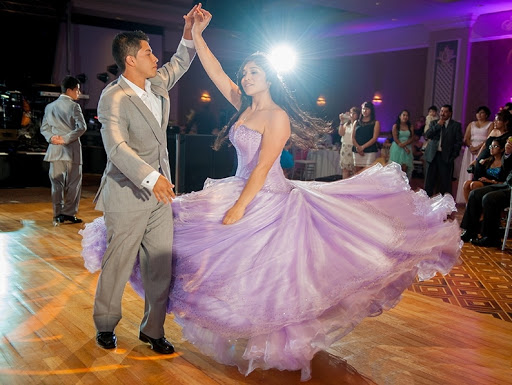
- The waltz: a choreographed dance, usually starting with a father-daughter dance and followed by the court.
- The tiara: placed on her head, often by a parent or godparent, to mark the moment.
- The change of shoes: flats are swapped for heels, symbolising a step towards adulthood.
- The last doll: a keepsake that marks the end of childhood play.
- Padrinos: godparents or sponsors who help with the celebration and act as mentors.
Families mix and adapt these customs, so not every quinceañera includes all of them.
What Is a Sweet 16?
A Sweet 16 is a coming-of-age party for a 16th birthday, celebrated mainly in the US and Canada. It has no official rules. It can be a family dinner or a large party with a DJ, a venue and a formal dress code, so it is shaped by the teenager’s own tastes rather than by tradition.
Where Does the Sweet 16 Come From?
There is no single documented origin. Most accounts link the Sweet 16 to debutante-style parties, where young women were formally introduced to society, and say it grew into a mainstream American celebration during the 20th century. Films, songs and TV shows kept it in the spotlight.
For the full story, including why it’s called “Sweet 16”, read our guide to what a Sweet 16 is.
Popular Sweet 16 Customs
- The candle ceremony: 16 candles, each lit for someone who matters to the birthday girl. The first is often for her parents.
- The father-daughter dance: a common highlight, similar to the quinceañera.
- A tiara and a change of shoes: borrowed from the quinceañera in many celebrations, usually with a parent taking part.
- Speeches and toasts: from parents, relatives or friends.
- Photo slideshows and photo booths: a look back at childhood and a way to capture the night.
- A themed party: from red-carpet glamour to a garden party.
Many of these customs were traditionally associated with girls, but today both girls and boys celebrate their 16th birthdays.

Quinceañera Court vs Sweet 16 Court
This is one of the clearest differences between the two celebrations.
The Quinceañera Court
The court of honour (corte de honor) is a core part of the celebration. It is made up of damas and chambelanes, often cousins, siblings and close friends. Traditionally there are 14 damas and 14 chambelanes, one pair for each year before the girl turns 15, along with her chambelán de honor, who is her main escort. Modern courts are often smaller, and seven pairs is a common choice.
The court has set jobs. They:
- Walk in a formal procession
- Wear matching outfits, with damas in matching gowns and chambelanes in matching suits or tuxedos
- Perform the waltz and often a surprise dance
- Rehearse in the weeks before
The Sweet 16 Court
Sweet 16 celebrations don’t require a court. When there is one, it’s usually a group of the birthday girl’s closest friends, chosen to honour them at the party. There is no set number, no required matching outfits and no fixed routine. Some families give the court a role in the candle ceremony or a group dance, and others skip it.
In short: a quinceañera court is a formal, structured group with a defined number and roles. A Sweet 16 court is an informal circle of friends.
Religion, Structure and Community
Religion
A quinceañera traditionally begins with a Catholic Mass or a religious blessing, and that spiritual element is a big part of what sets it apart. A Sweet 16 is mainly a social event. Some families add a church service or a blessing, but it is optional.
Structure and Formality
Quinceañeras tend to follow a more set order of events, such as the Mass, the entrance, the waltz and the traditional ceremonies. Sweet 16 parties are more flexible, so families can choose the format, theme and level of formality.
Community and Heritage
For many families, a quinceañera is also a way of passing on cultural identity and bringing extended family and community together. A Sweet 16 is usually centred on the birthday girl and her friends and family, and carries less of a heritage tradition.
Dresses: What to Wear to a Quinceañera or Sweet 16
The Birthday Girl
A quinceañera dress is usually a full ball gown with a big skirt, often in pink, white, pastels or a bold colour, finished with a tiara. Our guide to quinceañera dresses for girls has more ideas.
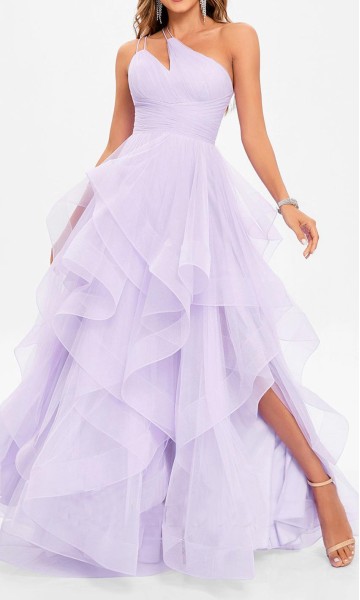
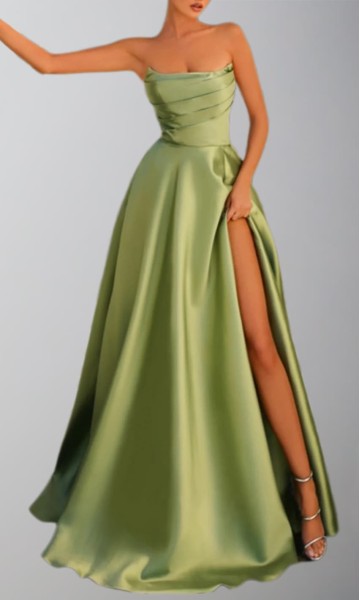
For a Sweet 16, there are more options, from a ball gown to a short party dress, depending on the venue and theme. If you love the quinceañera look, you can still choose a full-skirted gown. Browse our prom dresses and long prom dresses, or look at styles such as this lilac one-shoulder layered tulle dress, this strapless sage green slit gown, or this green lace corset dress.

Guests
For a quinceañera, dress formally, as you would for a wedding. Avoid white, which is usually kept for the guest of honour, and check whether the family has chosen a colour scheme for the court. For a Sweet 16, the dress code varies with the venue and theme, so check the invitation. Cocktail dresses are a safe choice for semi-formal parties.
Can You Have Both?
Yes. Many families celebrate both, such as a traditional quinceañera at 15 and a more relaxed Sweet 16 at 16. Others blend them into a single party, for example a Sweet 16 with a waltz, a court of honour and a tiara, or a quinceañera with a modern DJ and a candle ceremony. Both traditions keep evolving as families mix customs.
If you’re planning one, our Sweet 16 party planning guide covers the timeline, budget and ideas, and you can find matching birthday party invitations at Happyinvitation.
What About the UK?
Sweet 16 isn’t a traditional British celebration, so UK teenagers more often mark their 16th birthday with a family meal or a party with friends. Many of them get their first big formal occasion around the same age, with a Year 11 prom. Our prom dresses for 2027 are a good place to start if you’re choosing a gown.
Quinceañera vs Sweet 16 FAQ
The main differences are age, culture and structure. A quinceañera celebrates a 15th birthday and comes from Latin American tradition, usually with a religious ceremony, a court of honour and a waltz. A Sweet 16 celebrates a 16th birthday, mainly in the US and Canada, and is a flexible social party.
A quinceañera court is formal: damas and chambelanes, traditionally 14 pairs, who wear matching outfits and perform dances. A Sweet 16 court, if there is one, is an informal group of close friends with no set number or routine.
Not usually. It’s mainly a secular party, although families can add a church service, a blessing or a prayer.
Generally yes, because it follows a more traditional order of events. But Sweet 16 parties can also be very formal, and the cost of either depends on the guest list, venue and choices the family makes.
Yes. Boys celebrate their 16th birthdays, and some families hold a quinceañero for boys turning 15, usually keeping customs such as the waltz and wearing a suit instead of a gown.
Wear formal or cocktail attire to a quinceañera, and avoid white. For a Sweet 16, follow the invitation. If it says formal, dress as you would for a quinceañera. If it’s casual or themed, dress to match.
Yes. Some families hold both on consecutive birthdays, and others combine elements of both into one celebration.
There is no single documented origin of the name. “Sweet” is an affectionate word for youth and innocence, and 16 has long been seen as a threshold to adulthood. Read our full guide on what a Sweet 16 is for more.
Final Thoughts
A quinceañera and a Sweet 16 both celebrate a young person growing up, but they get there in different ways: one rooted in heritage, faith and ceremony, the other in friends, personal style and fun. Whichever you choose, or if you blend the two, the best celebration is the one that reflects the birthday girl and her family.
Looking for the dress? Browse our prom dresses for ball gowns, tulle skirts and sparkling party dresses in every colour.
You may also like: What Is a Sweet 16? Meaning, Origin and Traditions, Sweet 16 Party Planning Guide, Quinceañera Dresses for Girls
