
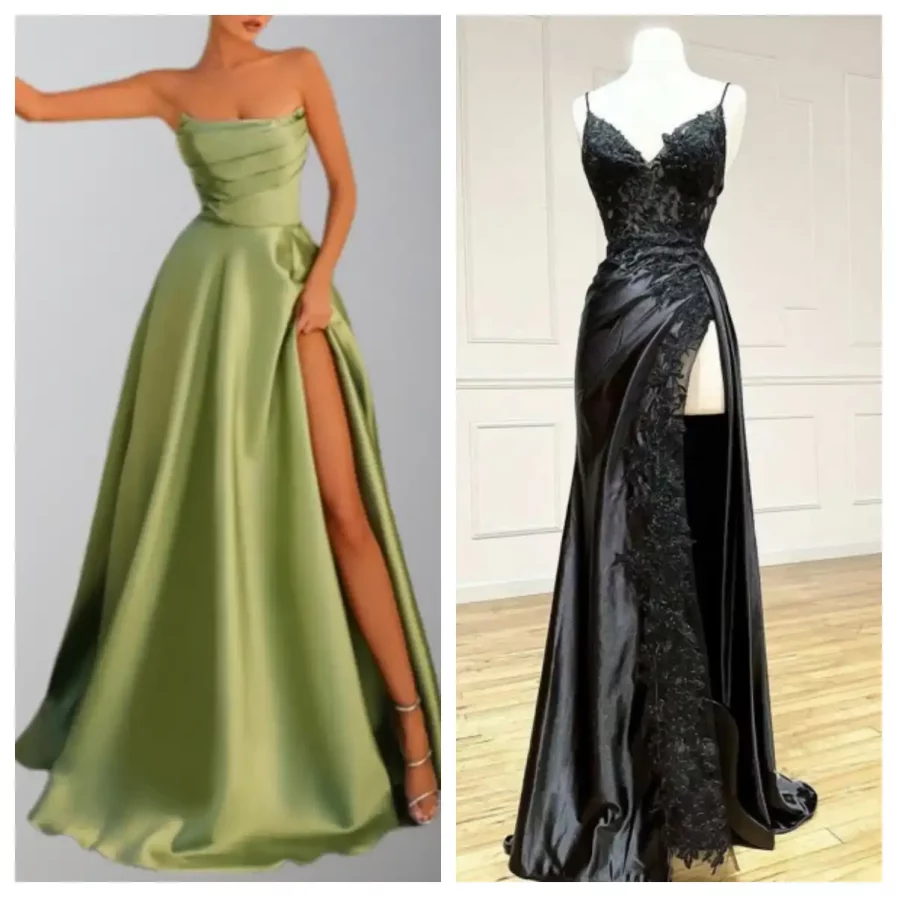
Once you’ve settled on a style — vintage, glam, or minimalist — the next big decision is color. And it’s not just about what looks good with your skin tone. Color is one of the fastest ways to reinforce (or completely undercut) the aesthetic you’re going for. A stunning glam silhouette in the wrong shade can read flat under venue lighting, while the right blush tone can make a simple vintage dress look like it stepped out of an old film.
This guide breaks down the color palettes that naturally pair with each prom aesthetic, so you can walk in already knowing what to look for — whether you’re browsing racks in person or filtering online.
Quick Answer: What Color Should You Wear for Your Prom Theme?
- Vintage — blush, ivory, dusty rose, champagne, and soft pastels. Muted, romantic tones that photograph warmly.
- Glam — jewel tones (emerald, sapphire, ruby) and metallics (gold, silver, rose gold). Bold, saturated colors that catch the light.
- Minimalist — neutrals like black, white, nude, taupe, and deep navy. Solid, unbroken color that lets the cut speak for itself.
Read on for the reasoning behind each palette, plus how undertone, venue lighting, and photos factor into the decision.
Vintage Prom Colors: Soft, Romantic, Nostalgic
Vintage styling (covered in detail in our vintage prom dress guide) leans on soft, storybook romance — and the color palette needs to match that mood. Saturated or neon shades tend to clash with lace overlays and tea-length silhouettes, pulling the whole look toward “costume” rather than “timeless.”
Best colors for vintage prom dresses:
- Blush and dusty rose — the most requested vintage prom color, and for good reason. It’s soft without disappearing into the background, and it photographs beautifully against both fair and deep skin tones.
- Ivory and champagne — read as elegant and bridal-adjacent, ideal if your prom has an “old Hollywood” or “enchanted garden” theme.
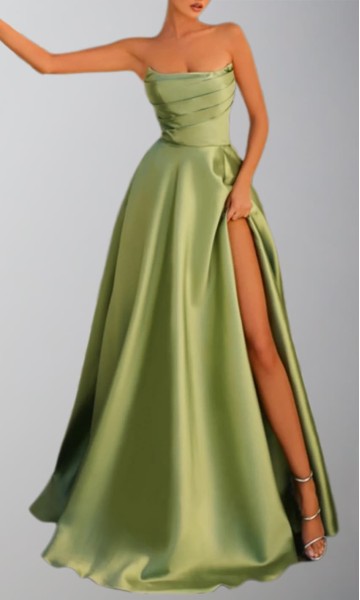
- Sage green and dusty blue — muted, slightly desaturated tones that feel period-appropriate without being costume-like.
- Soft lavender — pairs particularly well with lace detailing and adds a gentle pop of color without breaking the vintage mood.
Why it works: Vintage fashion eras (1950s–60s especially) leaned on softer, less saturated dyes than what’s common today. Muted tones subconsciously read as “classic” because they echo that older color palette, even to people who couldn’t name why.
Glam Prom Dress Color: Bold, Saturated, Statement-Making
If you’ve already gone glam on silhouette (mermaid cuts, sequins, dramatic slits — see our glam prom dress guide), your color choice should match that same “walk-in-and-own-it” energy. This is the one category where bold, saturated color is not just acceptable — it’s expected.
Best colors for glam prom dresses:
- Emerald green — one of the most photographed prom colors year after year, and it works exceptionally well with sequin and metallic-mesh fabrics.
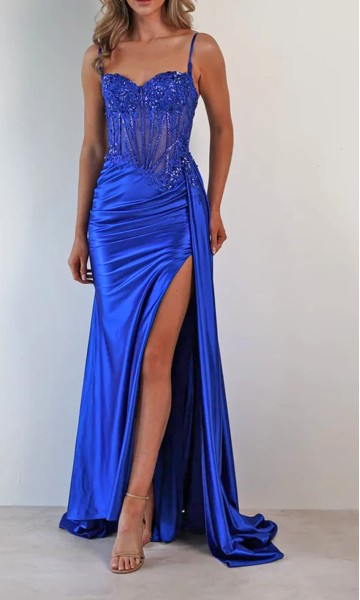
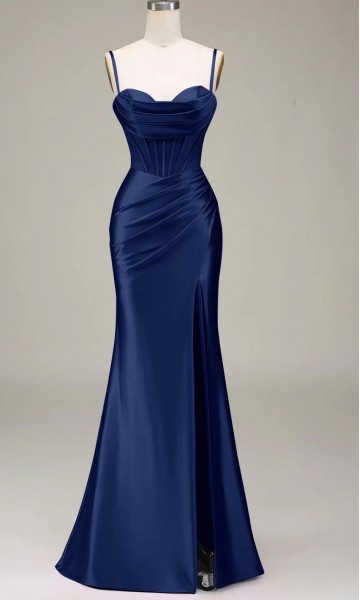
- Sapphire and royal blue — deep, rich, and reads as luxurious under both indoor lighting and flash photography.
- Ruby red and wine — dramatic and confident, especially in satin or beaded styles.
- Gold, silver, and rose gold metallics — the ultimate glam choice if you want maximum shine. Metallics catch venue lighting in a way solid colors can’t, which is exactly the point.
- Black — often overlooked as a “glam” color, but a fully sequined or heavily beaded black gown is one of the most dramatic options in this category.
Why it works: Jewel tones and metallics reflect light rather than absorb it, which is exactly what you want under prom lighting (usually dim, with spotlights or string lighting). This is also why glam colors photograph so well in flash photography — they don’t wash out the way pastels sometimes can in low light.
Minimalist Prom Dress Colors: Clean, Confident, Timeless
Minimalist dressing (see our minimalist prom dress guide) is about the cut and fabric doing the work, not embellishment — and the same logic applies to color. Busy prints or multiple colors on one dress pull focus away from the clean lines that make minimalist styling work in the first place.
Best colors for minimalist prom dresses:
- Black — the definitive minimalist color. A well-tailored black slip or column dress is timeless, versatile, and rewearable well beyond prom night.
- White and ivory — increasingly popular for minimalist prom looks, especially in matte satin or crepe, where the fabric’s subtle sheen becomes the entire design detail.
- Nude and taupe — creates an elongating, monochromatic effect against most skin tones, reinforcing the “quiet luxury” feel.
- Deep navy — a slightly softer alternative to black that still reads as sophisticated and clean.
Why it works: Minimalist styling relies on a single, uninterrupted color field to let the silhouette read clearly. Any pattern, ombré, or multi-tone effect immediately shifts the dress out of “minimalist” territory and into “statement,” which defeats the purpose of the style.
Prom Dress Colors by Theme: At a Glance
| Theme | Signature Colors | Fabric Pairing | Photographs Best In |
|---|---|---|---|
| Vintage | Blush, ivory, dusty rose, sage | Lace, tulle, chiffon | Natural or soft lighting |
| Glam | Emerald, sapphire, ruby, gold/silver metallics | Sequins, metallic satin | Flash/venue lighting |
| Minimalist | Black, white, nude, navy | Matte satin, crepe | Natural lighting |
Prom Dress Colors Frequently Asked Questions
Black, red, and emerald green consistently rank among the most searched and purchased prom dress colors, largely because they photograph well and suit a wide range of skin tones and dress styles.
It’s optional, not required. A better approach is coordinating tones rather than matching exactly — for example, a sapphire dress pairs well with a navy or silver tie, without needing to be the identical shade.
Most pastels can work on any skin tone if you choose the right undertone — warmer pastels like blush and champagne tend to suit warm undertones, while cooler pastels like dusty blue and lavender suit cooler undertones.
Metallics and jewel tones (glam palette) tend to photograph best in dim, spotlight-heavy venues, since they reflect available light rather than absorb it the way matte, muted colors can.
Yes — these palettes are a starting guide, not strict rules. A minimalist silhouette in a deep jewel tone, for instance, can bridge minimalist and glam nicely if you want understated shine without full embellishment.
Find Your Color, Find Your Look
Color is often the detail that ties a prom look together — or the one small mismatch that makes an otherwise perfect dress feel slightly off. If you haven’t already, revisit our guides on vintage, glam, and minimalist prom styling to find your silhouette first, then use this palette guide to narrow in on the shade that will make it shine. Browse our full prom dresses online collection with free color custom made service to get a flattering color by prom theme.
New to prom planning? See Prom 101: Everything First-Time Prom Goers Need to Know for the complete step-by-step guide.
