
If you’re standing up in an Orthodox Christian wedding — or any traditional Christian ceremony with its own distinct customs — you’ve probably noticed that most bridesmaid dress guides don’t quite fit. The advice tends to assume a shorter, seated Western ceremony, when Orthodox and other traditional Christian weddings often involve a longer service, more standing, and customs that most bridal retailers simply don’t design around.
That doesn’t mean modest, appropriate dressing is hard to find — it just means the checklist looks a little different. This guide walks through what tends to matter most for Orthodox and traditional Christian ceremonies specifically, with the caveat that customs vary meaningfully by parish, jurisdiction (Greek, Russian, Antiochian, Coptic, and others all have their own traditions), and individual priest, so it’s always worth confirming specifics with the couple or their clergy ahead of time.
Quick Answer: What to Know Before You Shop
- Standing: Many Orthodox wedding services involve long stretches of standing rather than sitting, so comfort and fit matter as much as modesty — avoid anything overly tight through the legs or restrictive through the arms.
- Shoulders and arms: Covered shoulders are commonly expected; some parishes are stricter about this than others, so confirm rather than assume.
- Head coverings: Some traditions expect or encourage bridesmaids (and other women) to cover their heads during the service — check with the couple, since this varies widely by jurisdiction and even by individual parish.
- Hemline: Below-the-knee to full-length is the safest range, in part because of the amount of standing and processing involved.
- Color: Similar to Catholic weddings, avoid white or anything that could be mistaken for the bride’s dress; jewel tones and deep, rich colors are traditionally popular choices.
Because customs vary so much between traditions and even individual parishes, the single most useful step is asking the couple directly — most are happy to clarify, and it saves you from guessing.
Why Traditional Wedding Ceremonies Have Different Practical Needs
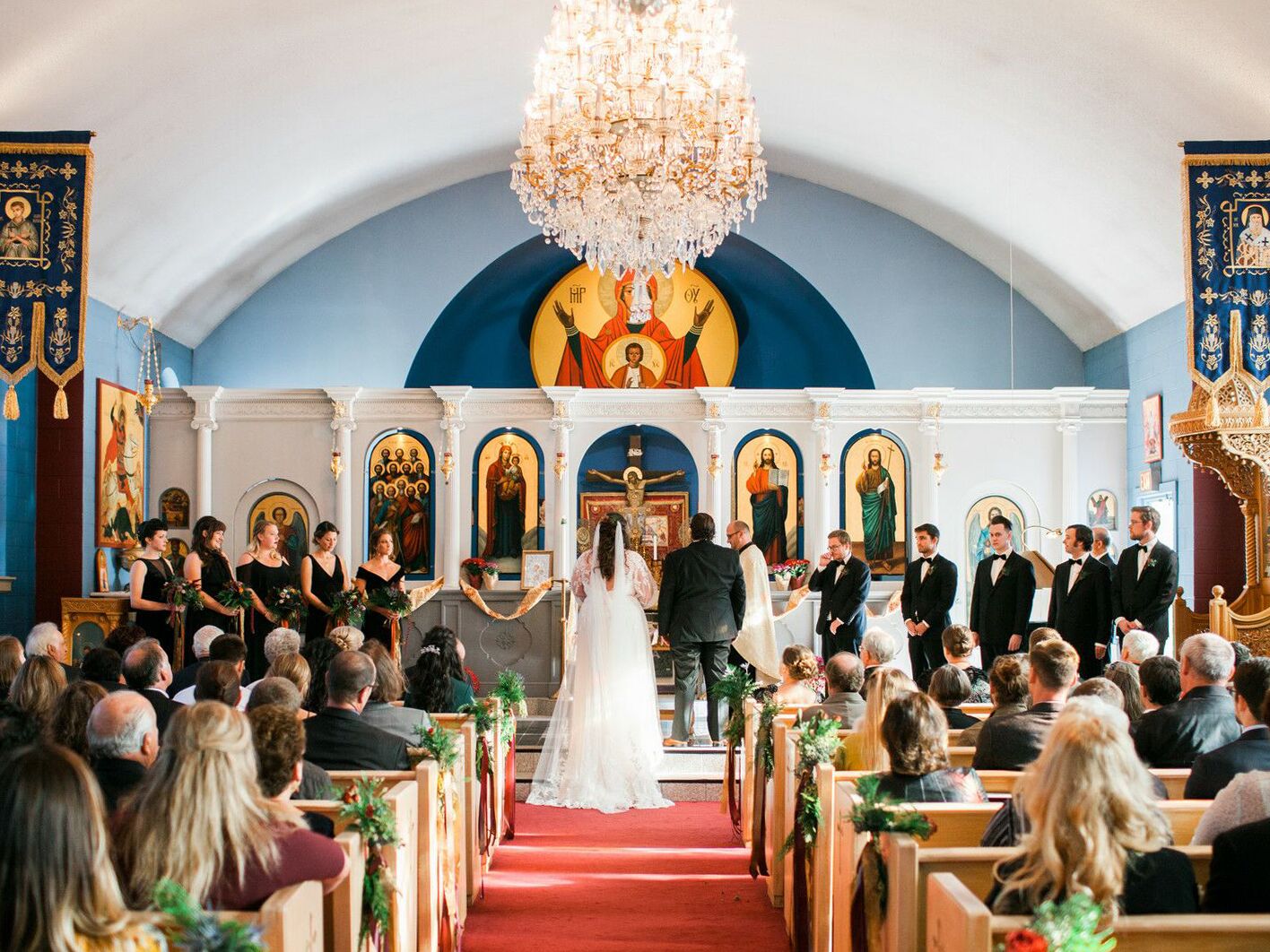
Traditional Christian weddings — especially Eastern Orthodox ceremonies — often include distinct rituals such as a betrothal rite, an exchange and blessing of rings, and a crowning ceremony, and the full service can run considerably longer than a typical Western wedding Mass. In many Orthodox traditions, much of the service is conducted standing rather than seated, which changes what “practical” means for a bridesmaid dress in ways that don’t come up in most bridal guides.
This is worth planning around for two reasons: comfort and modesty both hold up better in a fitted-but-not-tight silhouette that allows a full range of motion, and a dress that looks perfectly modest while standing still in a fitting room can shift or ride up during an hour or more of standing, turning, and processing.
Necklines and Shoulder Coverage of Modest Bridesmaid Dresses for Orthodox Wedding
The same modest-neckline logic from a Catholic wedding largely applies here — scoop, bateau, high V-neck, and illusion necklines all work well — but shoulder coverage tends to matter even more consistently across Orthodox and traditional Christian parishes.
What tends to work:
- Cap sleeves, three-quarter sleeves, or long sleeves
- Bateau or high scoop necklines
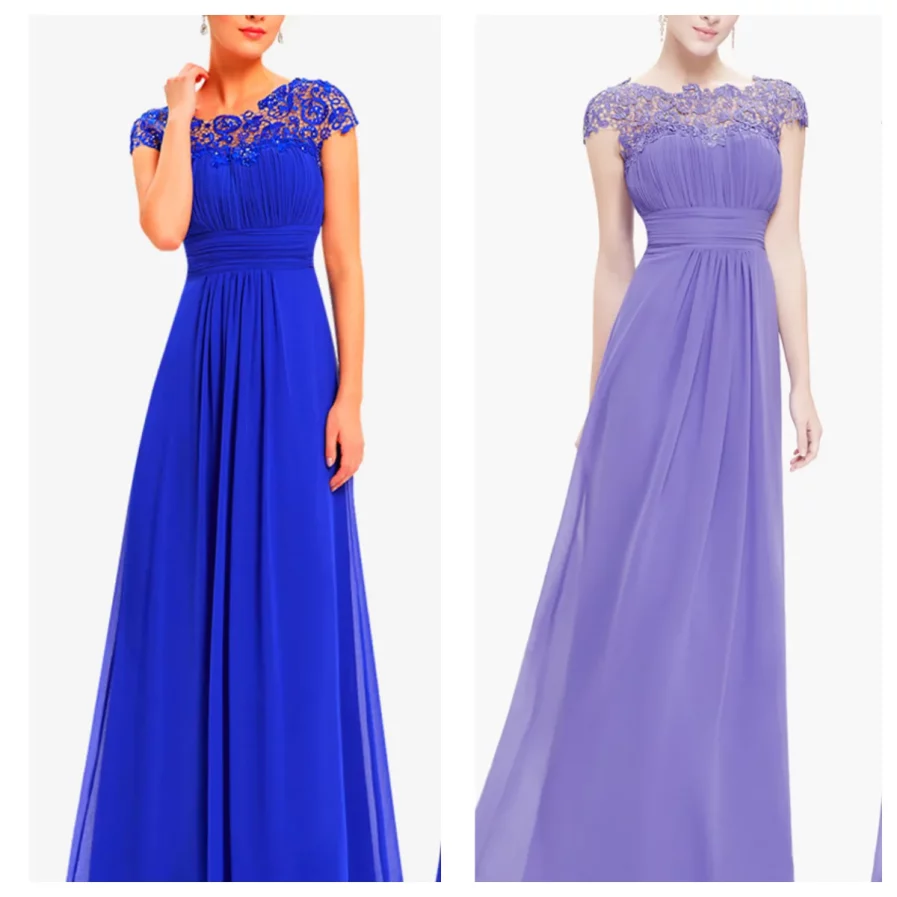
- Illusion necklines with mesh or lace panels for a modest look with some visual interest
What to double-check before assuming the bridesmaid dress is fine:
- Strapless or sleeveless dresses — even with a cover-up, confirm this is acceptable rather than assuming, since expectations here vary more than in many Western Catholic parishes
- Any dress with a low or open back, since bridesmaids may be more visible from behind during processions

Head Coverings: What to Know
Head coverings are one of the areas where Orthodox and traditional Christian practice differs most from a typical Catholic wedding, and it’s also one of the most variable — some traditions and parishes expect it, others don’t, and it can depend on whether the ceremony is more traditional or more contemporary in style.
If the couple lets you know a head covering is expected, a simple lace mantilla, veil, or headscarf in a coordinating color is the most common and elegant solution, and many bridal retailers sell these as a coordinating accessory alongside bridesmaid dresses. The key is asking early, since this isn’t something you want to solve the morning of the wedding.
Hemline, Fit, and Fabric of Orthodox Wedding Bridesmaid Attire for a Longer, Standing Ceremony
- Hemline: Below the knee, midi, or full-length are all safe choices. Very short hemlines can be uncomfortable and look less appropriate during a longer standing service.
- Fit: A structured but not overly tight fit through the hips and legs matters more here than in a seated ceremony — you’ll want enough ease to stand comfortably for an extended period without constantly adjusting the dress.
- Fabric: Crepe and satin both hold their shape through movement and standing better than very soft, clingy jersey. Heavier fabrics like velvet also work well for fall and winter Orthodox weddings, which often lean formal.
Comparison: Modest Bridesmaid Dresses Considerations by Ceremony Type
| Consideration | Catholic Wedding | Orthodox / Traditional Christian Wedding |
|---|---|---|
| Typical service length | Often 45–60 minutes | Can run longer, sometimes over an hour |
| Standing vs. seated | Mostly seated with standing intervals | Often significant standing throughout |
| Head covering expectations | Rare, parish-dependent | Varies by tradition; more common in some jurisdictions |
| Shoulder coverage | Generally expected | Generally expected, often more consistently enforced |
| Safest hemline | Tea-length to full-length | Below-knee to full-length |
| Safest color | Any except white/ivory | Any except white/ivory; jewel tones traditional |
Traditional Christian Wedding Bridesmaid Dresses Frequently Asked Questions
No — this varies significantly by jurisdiction (Greek, Russian, Antiochian, Coptic, and others all have distinct customs) and even by individual parish or priest. It’s best to ask the couple directly rather than assume either way.
Many Orthodox wedding services are traditionally conducted mostly standing rather than seated, and the ceremony itself — including rites like the betrothal and crowning — can run longer than a typical Western ceremony, which makes comfortable, non-restrictive fit more important than in a fully seated service.
Often yes, especially A-line dresses with covered shoulders and a below-knee or longer hemline, which tend to work across both traditions. The main extra consideration for an Orthodox wedding is checking whether a head covering is expected and confirming comfort for an extended standing service.
As with most Christian wedding traditions, white and ivory are reserved for the bride. Beyond that, deep jewel tones — burgundy, emerald, navy — are popular and traditional choices, though there’s no universal rule beyond avoiding bridal-adjacent shades.
The couple is almost always the best resource, since customs vary so much by jurisdiction and individual parish. Most couples are happy to clarify shoulder coverage, head covering expectations, and any other specifics well ahead of the wedding.
People Also Asked
How to Find Modest Bridesmaid Dresses for a Catholic Wedding Ceremony
Modest Bridesmaid Dresses by Season: What to Wear Spring Through Winter
Final Thoughts: What to Wear as A Bridesmaid at An Orthodox Wedding
Dressing modestly for an Orthodox or traditional Christian wedding follows many of the same principles as a Catholic ceremony — covered shoulders, appropriate hemlines, and non-bridal colors — with a few tradition-specific details layered on top, particularly around head coverings and the physical demands of a longer, often standing service. Because customs vary so widely between jurisdictions and even individual parishes, the most reliable first step is simply asking the couple what’s expected, then shopping with both modesty and comfort in mind.
Browsing our affordable modest bridesmaid dresses with covered shoulders and longer hemlines is a great starting point for either tradition, with a few small adjustments once you know the specific customs of the ceremony you’re standing up in.
New to planning bridesmaid dresses? See the Bridesmaid Dresses: Complete Style, Colour & Fit Guide for the full picture beyond modesty specifically.
