
Quick answer:
Bridesmaid dress length doesn’t need to match your wedding dress exactly — but it should echo its formality and silhouette. The goal isn’t matching hemlines — it’s making sure your bridesmaids’ length doesn’t outshine or clash with your gown’s formality. As a rule of thumb:
- floor-length wedding gowns (ball gown, mermaid, trumpet, A-line) pair best with floor-length or maxi bridesmaid dresses;
- tea-length or short wedding dresses give you more freedom to go tea-length, midi, or even mixed lengths.
You’ve already found your dress. Now you’re staring at a wall of bridesmaid options wondering: does the length actually matter, or is this something you’re overthinking? A little of both. Get it right and your bridal party photos look intentional and cohesive. Get it wrong — say, mini dresses next to a cathedral-train ball gown — and the formality mismatch is the kind of thing guests notice even if they can’t say why.
Here’s how to actually think about it, starting with the one factor most guides skip: your own dress.
Start With Your Wedding Dress, Not a Generic Chart
Most bridesmaid length guides jump straight to “floor-length for black-tie, tea-length for semi-formal” — and that’s useful, but it skips the step that matters most for you specifically: what does your dress look like, and what does it need next to it?
Your gown sets the formality ceiling for the whole bridal party. A bridesmaid length that reads more casual than your dress will make your gown look overdressed for the room; a length that’s more formal than a relaxed bridal look can compete with you for attention. Match the energy, not the exact hem.
By Wedding Dress Silhouette
| Your Wedding Dress | Best Bridesmaid Length | Why |
|---|---|---|
| Ball gown (full skirt, dramatic volume) | Floor-length or maxi | Anything shorter looks visually unbalanced next to that much fabric — your bridesmaids need length to hold their own in photos without competing in silhouette. |
| Mermaid / trumpet (fitted through the hip, flares at the knee) | Floor-length, sleek silhouettes | This is your most formal silhouette by feel even if simple; floor-length keeps the whole party reading as one formality level. |
| A-line (fitted bodice, gradual flare) | Floor-length or midi | The most flexible silhouette — floor-length for a formal venue, midi if the wedding leans relaxed. |
| Sheath / column (slim, minimal volume) | Midi or floor-length | A sheath gown often signals a modern, less traditional wedding — midi bridesmaid dresses fit that tone without underdressing. |
| Tea-length or short wedding dress | Tea-length, midi, or knee-length | This is where you have real freedom to go shorter — a full-length bridesmaid dress will look overdressed next to a short bridal gown. |
| Minimalist / slip dress | Midi or knee-length | Casual, modern gowns pair naturally with shorter, simpler bridesmaid silhouettes rather than traditional floor-length formality. |
The pattern: the more formal and voluminous your gown, the more length your bridesmaids need to match its presence. The more relaxed or shorter your gown, the more you can shorten theirs too.
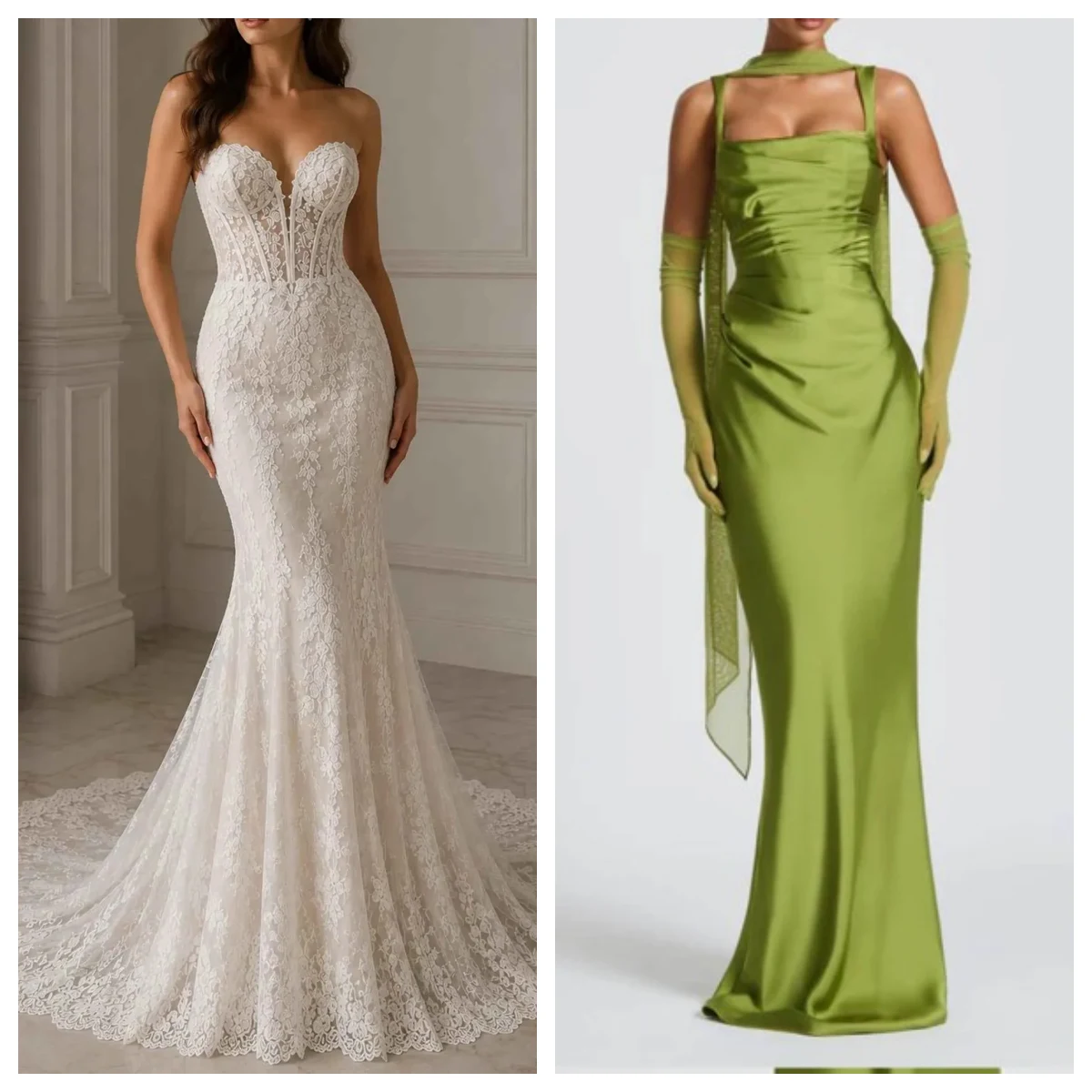
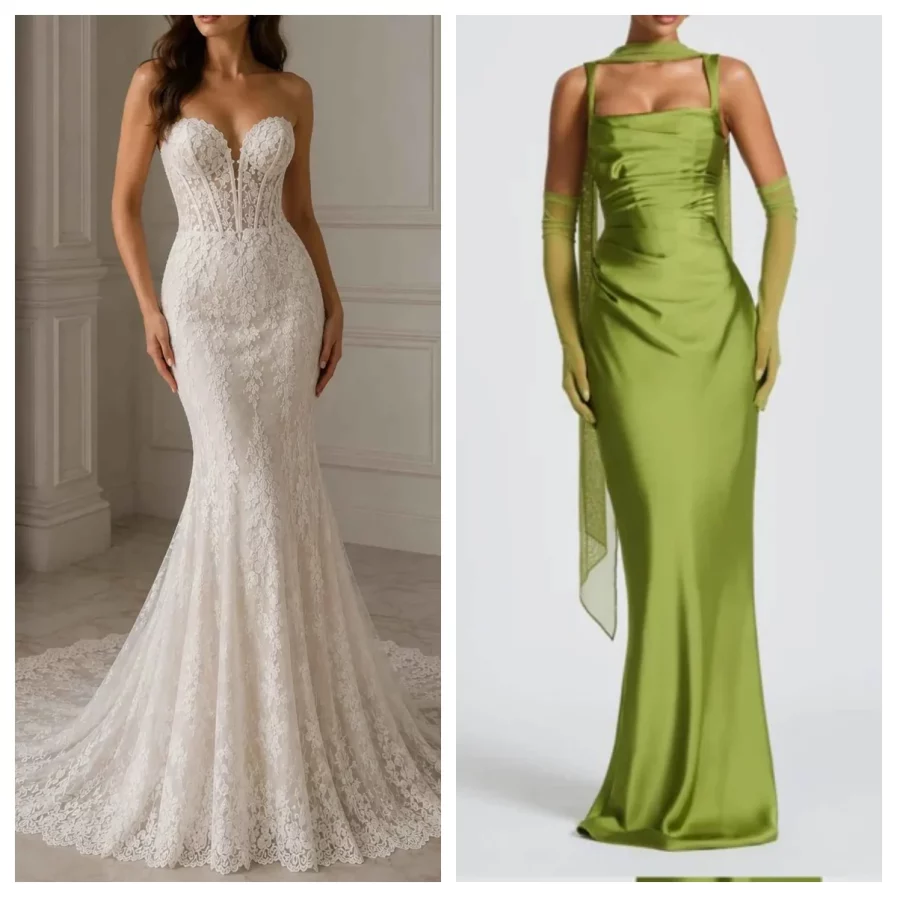
Order: ivory lace mermaid wedding dress / floor length sleek sheath bridesmaid dress
Formality and Venue: The Secondary Filter
Once you know what your dress calls for, formality and venue narrow things further within that range.
- Black-tie or cathedral wedding: Floor-length is close to non-negotiable, regardless of your gown’s exact silhouette — this is the one context where the “match the room” rule overrides personal preference.
- Semi-formal indoor or evening wedding: Tea-length or midi hits the sweet spot — polished without being as formal as full floor-length.
- Garden, beach, or destination wedding: Knee-length or short styles in lightweight fabric keep bridesmaids cool and practical, especially if there’s grass, sand, or a lot of standing.
- Backyard or casual wedding: Mini or knee-length dresses fit the relaxed tone — floor-length here can look mismatched with the setting even if it matches a formal gown.
If your venue and your dress send different signals — say, a ball gown at a casual backyard wedding — lean toward the venue for bridesmaids and let your dress be the one formal element. Guests read the room, not just the dress.
The Hemming Details Nobody Tells You
This is the part that trips people up after the dresses are already ordered.
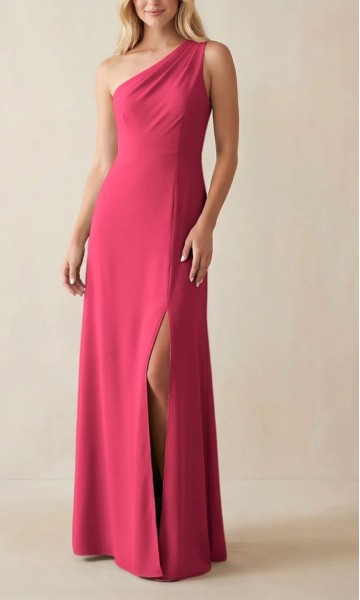
- “Floor-length” isn’t fixed — it depends on shoes. A dress hemmed to graze the floor in flats will pool or drag in 3-inch heels. Bring the actual wedding-day shoes (or a heel of the same height) to every fitting, not just the final one.
- The standard target is about 1 inch above the floor in wedding-day heels — enough clearance to walk and dance without tripping or dragging the hem through grass, gravel, or a dance floor.
- Most floor-length dresses need 2–4 inches taken up for an average-height bridesmaid. Budget for this in both time and cost — it’s a near-universal alteration, not an exception.
- You can shorten a floor-length dress to tea-length, but you can’t lengthen a short one. If a bridesmaid is torn between two lengths, the floor-length option is the safer buy — it can be hemmed down later if needed, while a knee-length dress has no fabric to let out.
- Check the hem details before you cut anything. If the dress has beading, lace trim, or a scalloped edge at the bottom, shortening it may remove those details entirely. Ask your seamstress before committing, and price this in — detailed hems cost more to alter than a plain one.
Can Bridesmaids Wear Different Lengths?
Yes — and it’s increasingly common, especially for less formal weddings. A few ways to make mixed lengths look intentional rather than mismatched:
- Anchor with one consistent element. Keep everyone in the same color palette or the same fabric (all satin, all chiffon) and let length vary — the eye reads it as coordinated even without matching hemlines.
- Line them up strategically. If you’re staggering lengths in photos, arranging shorter to longer (or vice versa) across the lineup reads as a deliberate style choice rather than a mismatch.
- Set the maid of honor apart, on purpose. A different hemline for your MOH is an easy, low-cost way to visually distinguish her role without changing the dress code for everyone else.
- Let body type guide the choice within your approved range. If you’re allowing length flexibility, petite bridesmaids often prefer tea-length or knee-length (it elongates the leg line), while taller bridesmaids can carry floor-length or dramatic midi cuts without being overwhelmed by fabric. This works best when every option you approve still matches your dress’s formality level from the table above — flexibility on length doesn’t mean flexibility on formality.
Mixed lengths still need a ceiling: don’t approve anything more casual than your venue and gown can support, even if you’re being flexible about exactly where each hem falls.
Get your bridesmaid dresses online at actually affordable price from Happyprom.co.uk to match your flattering wedding dresses.
Quick Reference: What to Avoid
- Mini or short bridesmaid dresses next to a ball gown or cathedral train — the formality gap reads as mismatched in photos, not deliberately relaxed.
- Floor-length bridesmaid dresses at a casual backyard or beach wedding, even with a formal gown — let the venue set the bridesmaid tone.
- Ordering dresses without bringing wedding-day-height shoes to fittings — this is the single most common reason floor-length hems come out wrong.
- Choosing a knee-length dress “to be safe” when a bridesmaid is unsure — there’s no way to lengthen it later if she changes her mind.
Bridesmaid Dress Length Wedding Dress FAQ
No. It should match your dress’s formality and silhouette energy, not its literal hemline. A floor-length ball gown calls for floor-length bridesmaid dresses; a tea-length wedding dress gives you room to go shorter.
Floor-length is the standard for black-tie or cathedral-style formal weddings, regardless of your own gown’s exact silhouette.
Yes, especially for semi-formal or garden weddings — just keep all the bridesmaids within the same general length category (all tea-length, not tea-length next to floor-length) unless you’re deliberately styling a mixed-length look.
Most need about 2–4 inches taken up for an average-height bridesmaid, and the target is roughly 1 inch of clearance above the floor in wedding-day heels.
Yes, in most cases — floor-length can be hemmed to tea or knee length. Just check the hemline for beading, lace, or trim first, since shortening can remove those details.
You May Also Interested in:
Short vs. Long Wedding Dresses: Which One Is Really Right for You?
Bridesmaid Dresses: The Ultimate Style, Colour & Fit Guide (2026)
A-Line vs. Mermaid Bridesmaid Dresses: Which Style Is Right for You?
