
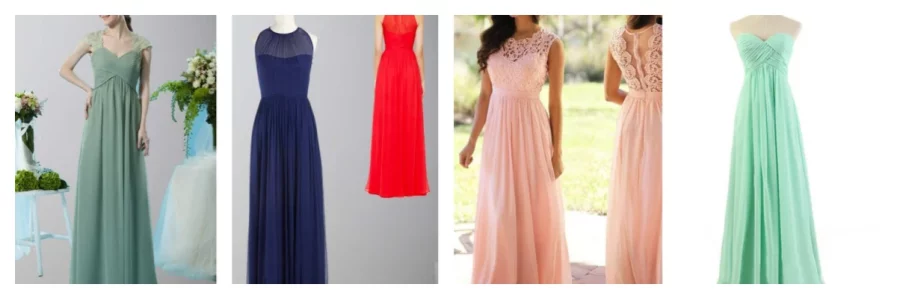
Planning a Catholic wedding comes with a beautiful kind of structure. The Mass, the vows, the readings — every part of the day carries meaning, and that includes what the bridal party wears as they stand at the altar. If you’re a bride trying to dress your bridesmaids appropriately for a church ceremony, or a bridesmaid wondering what “modest” actually means in practice, you’ve probably noticed that most bridesmaid dress collections aren’t built with church guidelines in mind. Plunging necklines, thigh-high slits, and backless silhouettes dominate the racks — which makes the search for something reverent and stylish feel harder than it should be.
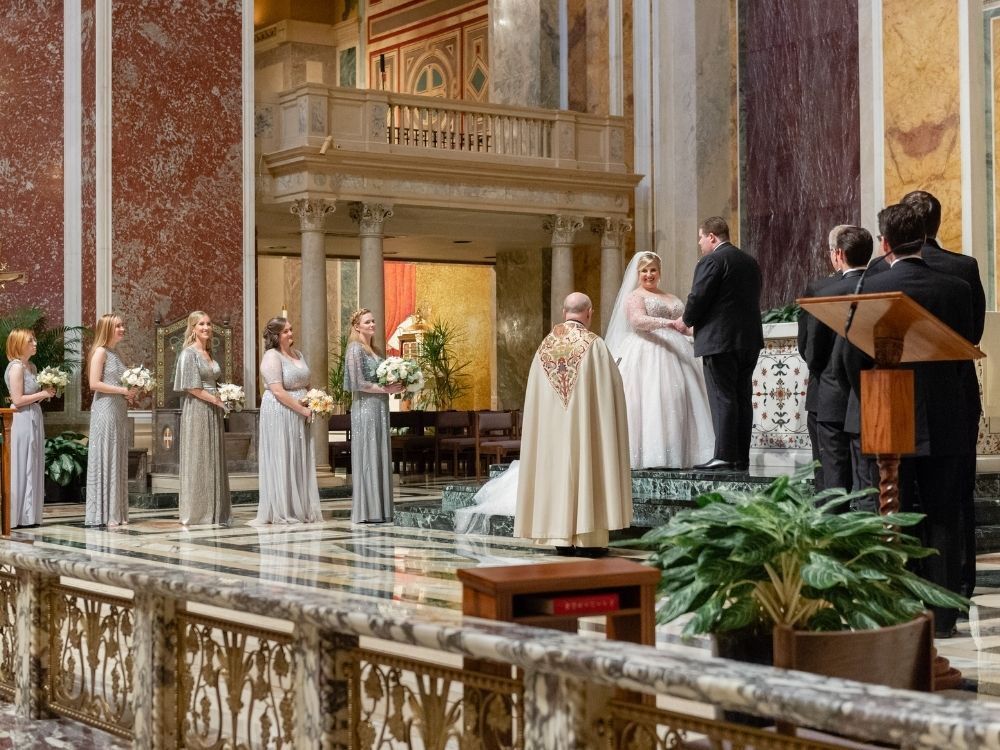
The good news: modest doesn’t mean matronly, and Catholic-appropriate doesn’t mean boring. With the right silhouette, fabric, and a few smart styling tricks, your bridesmaids can look elegant, cohesive, and completely at ease walking down the aisle of a church — no cardigan cover-ups required.
This guide walks through exactly what to look for, what to avoid, and how to shop smart so every dress you choose photographs beautifully and honors the sanctity of the ceremony.
Quick Answer: What Makes a Bridesmaid Dress “Catholic Wedding Appropriate”?
If you only have a minute, here’s the short version:
- Necklines: Modest scoop, bateau, high V-neck, or illusion necklines. Avoid plunging V-necks or strapless styles unless paired with a shawl or jacket for the ceremony.
- Shoulders: Covered shoulders are ideal for the church portion. Cap sleeves, three-quarter sleeves, or long sleeves are the safest bet; some parishes require shoulders covered for anyone entering the sanctuary.
- Hemline: Tea-length, midi, or full-length. Above-the-knee is generally fine for the reception but can feel too casual for the church itself.
- Back: Fully covered or minimally open. Deep V-back or open-back styles are best saved for photos taken outside the church, not the ceremony itself.
- Fabric and fit: Structured, non-clingy fabrics like satin, crepe, chiffon, and taffeta drape modestly without needing extra tailoring.
If every dress on your shortlist checks those five boxes, you’re in good shape for both the Mass and the reception.
Why Modesty Matters More at a Catholic Ceremony
Catholic weddings are typically held inside the church as part of a full Nuptial Mass, which means the bridal party isn’t just standing for a quick outdoor ceremony — they’re participating in a sacrament, often for 45 minutes to over an hour, in a sacred space. Many parishes have written or unwritten dress code expectations for anyone standing at the altar, not just the bride. Some priests will address this directly with the couple during pre-Cana counseling; others simply expect it to be handled without being asked.
Because of this, it’s worth treating “modest” as a functional requirement, not just an aesthetic preference. A dress that looks fine in a boutique fitting room can read very differently under church lighting, in wedding photos taken from the pews, or when a bridesmaid is standing, kneeling, and processing in front of family and clergy. Building modesty into the dress itself — rather than relying on a shrug added at the last minute — keeps the whole bridal party looking polished and unified in every photo, not just the posed ones.
Modest Bridesmaid Dresses Necklines That Work (and the Ones to Skip)
The neckline is usually the first thing a bride or bridesmaid worries about, and for good reason — it’s the most visible modesty decision in the whole dress.
Dress Necklines that read as modest and elegant:
- Bateau (boat neck): Sits close to the collarbone, covers the shoulders when paired with sleeves, and photographs beautifully from the front pews.
- High scoop neck: Rounded and conservative without looking dated.
- Illusion neckline: Sheer mesh panels that create the appearance of skin coverage while still allowing some visual interest — popular for both bridal and bridesmaid gowns right now.
- Modest V-neck: A V-neck can still be appropriate as long as it doesn’t dip below the collarbone.
- High halter: Can work well if the back is also modest, though this style is worth double-checking in person since halter cuts vary widely by brand.

Necklines to avoid or modify for church wedding:
- Deep plunging V-necks
- Strapless or sweetheart necklines without a shawl, bolero, or jacket layered on top for the ceremony
- Off-the-shoulder styles that leave both shoulders and a large expanse of chest exposed
Pro tips: If a bridesmaid already owns or loves a strapless or sweetheart dress, it doesn’t have to be ruled out entirely — a well-fitted lace bolero, cropped cardigan, or matching shawl can bridge the gap for the church without changing the dress underneath. Just make sure the cover-up is planned and purchased ahead of time, not improvised the morning of the wedding.
Sleeves and Shoulder Coverage of Church Appropriate Bridesmaid Dresses
Shoulder coverage is where a lot of modest bridesmaid searches get stuck, mostly because sleeveless is still the default in most collections. A few reliable options:
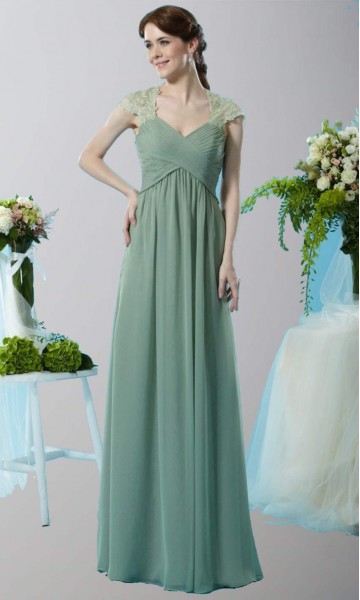
- Cap sleeves offer just enough coverage to soften a bare-shoulder look without adding bulk.
- Three-quarter sleeves are a popular middle ground — elegant, slightly vintage-inspired, and flattering on most body types.
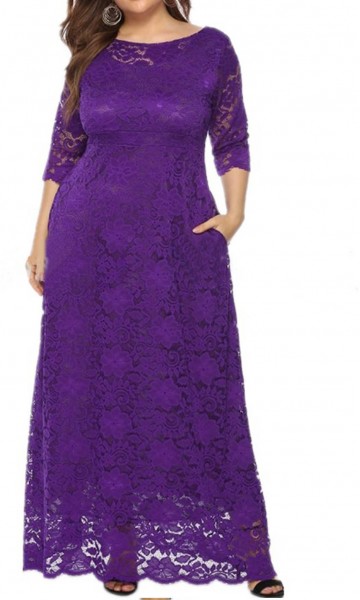
- Long sleeves work beautifully for fall and winter Catholic weddings, especially in lace or illusion fabric, and tend to feel intentional rather than like an afterthought.
- Detachable sleeves are a clever compromise: bridesmaids wear the sleeves for the ceremony and remove them for the reception, giving you two looks from one dress.
Hemlines and Fit of Catholic Wedding Dress Code Bridesmaid Dress
Full-length gowns are the most traditional choice for Catholic weddings and remain the safest option for formal, evening ceremonies. That said, tea-length and midi dresses have become increasingly popular for bridesmaids, particularly for daytime or garden-adjacent celebrations, and they read as perfectly appropriate as long as the rest of the dress (neckline, sleeves, fit) is modest.
What to watch for regardless of length of modest bridesmaid dresses:
- Slits: A modest slit that hits at or below the knee is generally fine; anything higher can look inappropriate when a bridesmaid is standing or walking during the processional.
- Fabric behavior: Clingy jersey or satin can look modest on a hanger and much less so under church lighting or during movement. Structured fabrics like crepe, taffeta, and chiffon hold their shape and drape more forgivingly.
- Fit through the hips and bust: Modesty isn’t only about coverage — a dress that’s too tight can feel immodest even with a conservative neckline. Sizing up slightly or choosing a fit-and-flare silhouette often solves this without any extra alterations.
Comparison: Popular Modest Bridesmaid Dress Silhouettes for Catholic Weddings
| Silhouette | Best For | Neckline Options | Sleeve Options | Modesty Notes |
|---|---|---|---|---|
| A-line | Most body types, formal Mass ceremonies | Bateau, scoop, illusion | Cap, 3/4, long | Skims the body, forgiving fit, easy to keep modest |
| Fit-and-flare | Hourglass and pear shapes | High V, scoop | Cap, 3/4 | Flatters without clinging; check bust coverage |
| Empire waist | Pregnant or postpartum bridesmaids | Scoop, bateau | 3/4, long | Naturally modest through the midsection |
| Column/sheath | Slim, formal evening weddings | Illusion, high halter | Long, or sleeveless with a jacket | Elegant but can cling — choose structured fabric |
| Tea-length | Daytime or spring/summer Catholic weddings | Scoop, bateau | Cap, 3/4 | Playful yet appropriate; pair with modest neckline |
[Move on to read: A-Line vs. Mermaid Bridesmaid Dresses: Which Style Is Right for You? ]
Church Appropriate Bridesmaid Dresses Fabric Guide: What Drapes Modestly
Not all fabrics behave the same way once a bridesmaid is standing, sitting, and moving through a ceremony. A quick reference:
- Chiffon: Lightweight and flowy, drapes softly without clinging — a strong choice for warm-weather weddings.
- Crepe: Structured and matte, holds its shape and is one of the most forgiving fabrics for modest fits.
- Satin: Elegant and formal, but can cling in fitted styles — best in A-line or looser silhouettes.
- Taffeta: Crisp and structured, great for fuller skirts and tea-length dresses.
- Lace overlay: Adds visual texture and can be used strategically over illusion panels to soften a neckline or sleeve without looking heavy.
Where and How to Shop for Modest Bridesmaid Dresses for Catholic Wedding
- Filter by neckline and sleeve length first, not by color. Most online bridal retailers let you filter by neckline (scoop, bateau, V-neck) and sleeve type before you even get to color and price — start there to narrow the field quickly.
- Look for “modest bridesmaid dress” or “church wedding” collections. Many bridal sites now curate dedicated modest or “sanctuary-appropriate” collections, which saves significant browsing time compared to filtering a general catalog.
- Order swatches or a sample dress before committing for the whole party. Fabric drape and true coverage are hard to judge from product photos alone, especially for illusion necklines and backs.
- Ask about matching cover-ups. If your top dress choice isn’t quite modest enough on its own, check whether the retailer offers a matching shawl, bolero, or jacket in the same color family — this is often easier than searching for a different dress from scratch.
- Coordinate with your officiant or parish coordinator early. If you’re unsure what your specific parish expects, a quick conversation months ahead of the wedding avoids a stressful last-minute wardrobe scramble.
- Budget time for alterations. Modest doesn’t always mean “off the rack ready” — a good tailor can add sleeves, raise a neckline, or adjust a slit far more affordably than most brides expect.
Communicating Guidelines Without Being Bossy
Setting modesty expectations for your bridal party can feel awkward, but it doesn’t have to be — most bridesmaids actually appreciate clear guidelines, since it makes their own shopping easier. Try framing it simply:
“Our ceremony is in a Catholic church, so we’re asking for necklines at or above the collarbone, sleeves or wide straps, and hemlines at or below the knee. Beyond that, pick whatever color and style makes you feel great!”
This kind of note gives everyone a clear target without making anyone feel micromanaged — and it means you only have to have the conversation once.
Catholic Wedding Dress Code Bridesmaids Frequently Asked Questions
Many do, though enforcement varies widely by parish and by priest. Some churches have written guidelines for anyone standing at the altar, including bare shoulders, plunging necklines, and short hemlines; others leave it to the discretion of the wedding party. It’s always worth asking your officiant directly rather than assuming.
Strapless dresses aren’t automatically off-limits, but many parishes prefer shoulders to be covered during the ceremony itself. A matching shawl, bolero, or wrap layered over a strapless dress is a simple way to keep the original dress while meeting church expectations.
A-line dresses with a bateau or scoop neckline and cap or three-quarter sleeves are generally considered the most consistently modest silhouette, since they cover the shoulders, skim rather than cling to the body, and work across most Catholic parish guidelines.
Yes, as long as the neckline, sleeves, and fit are modest. Tea-length has become a popular choice for daytime and warm-weather Catholic weddings and is generally viewed as appropriately formal for a church ceremony.
There’s no universal rule, but cap sleeves or a wider strap that sits closer to the shoulder is a safe middle ground if your parish doesn’t have explicit guidelines. Fully sleeveless with thin straps is more likely to be flagged in stricter parishes.
People Also Asked
How Many Bridesmaid Dress Colors Should You Use?
How to Find a Modest Wedding Dress for a Catholic Wedding Ceremony (Without Losing Your Mind)
Best Bridesmaid Dress Color Combinations for 2026/2027 Weddings
Final Thoughts: What to Wear As a Bridesmaid in A Catholic Wedding
Finding modest bridesmaid dresses for a Catholic wedding doesn’t have to mean compromising on style. The key is thinking about neckline, sleeves, hemline, and fabric together as one modesty package rather than trying to fix one dramatic dress with an afterthought cover-up. Start your search with modest-specific filters, order samples early, and loop in your officiant if you’re ever unsure — your bridal party will thank you for the extra planning when they’re standing comfortably at the altar, looking every bit as elegant as you imagined.
Browsing affordable modest bridesmaid dresses uk collections now is the easiest way to see how many beautiful, church-appropriate options are actually out there — often more than brides expect once they know what to search for.
New to planning bridesmaid dresses? See the Bridesmaid Dresses: Complete Style, Colour & Fit Guide for the full picture beyond modesty specifically.
