
You’ve gathered your “I Do” crew, and they’re a beautiful, eclectic mix of your favorite people—but looking at them side-by-side, you realize you have a bit of a vertical puzzle on your hands. From your 5’1″ college roommate to your 6’0″ cousin, the height gap can feel like a styling hurdle when you’re dreaming of those polished, “Pinterest-perfect” bridal party photos.
How do you create a unified aesthetic without making someone feel like they’re drowning in fabric or wearing a high-water hem? The secret isn’t about making everyone the same height; it’s about creating a continuous line of color. Here’s the good news: height differences don’t have to mean styling chaos. The secret weapon hiding in plain sight? The floor-length dresses. When strategically chosen and properly styled, long bridesmaid dresses become the great equalizer that ties your entire bridal party together, regardless of who’s reaching for the top shelf and who’s climbing counters to get there.
:max_bytes(150000):strip_icc()/TheClassic_PHOTOBYLUNADEMARE-4aac88d5ef524019b56f2c3fb6c2ec4f.jpg)
Let’s dive into how to make mismatched heights work beautifully for your big day.
Why Floor-Length Bridesmaid Dresses Are the Great Equalizer
Floor-length bridesmaid dresses are quite literally the great equalizer of bridal party fashion. When everyone’s hem grazes the ground, the eye naturally focuses on the overall silhouette, the color palette, and the vertical lines created by the fabric—not on where a hemline awkwardly hits someone’s mid-calf versus another person’s knee.
How Floor-Length Hems Create Visual Cohesion
The beauty of this approach is that it creates a visual “line of color” in your photos. Rather than a choppy, uneven appearance where varying hemlines draw attention to height differences, floor-length gowns create one continuous, elegant sweep that makes your bridal party look intentionally cohesive. Whether you’re working with bridesmaids who range from petite to tall, this uniform hemline grounds the entire group.
In wedding photography, this matters enormously. The camera captures a harmonious flow of fabric and color rather than a disjointed mix of different lengths that can make even the most carefully coordinated color scheme look scattered.

Hidden Benefits: Shoe Flexibility for Every Height
Floor-length bridesmaid dresses are also master disguise artists. Your petite bridesmaids can wear platform heels or chunky wedges underneath without anyone being the wiser, while your taller friends can opt for ballet flats or low sandals for comfort. The long skirt hides a multitude of “height hacks,” giving everyone the freedom to adjust their actual height without compromising the uniform look.
This means comfort doesn’t have to be sacrificed for aesthetics—a win-win for bridesmaids who’ll be on their feet all day.
Best Fabrics for Bridesmaid Dresses: Tall and Petite Styling
Here’s where many brides go wrong: they assume any floor-length bridesmaid dress will do the trick. But fabric matters enormously when you’re working with a range of body types and heights. The right material can enhance the cohesive look you’re after, while the wrong one can inadvertently emphasize the very differences you’re trying to minimize.
Chiffon and Crepe: The Best Fabrics for Mixed Heights
These fabrics are your MVPs for bridesmaid dresses with different heights. They flow downward rather than outward, creating beautiful vertical lines that naturally elongate petite frames without overwhelming them.
Chiffon bridesmaid dresses deliver that dreamy, romantic movement that photographs beautifully. The lightweight, sheer fabric creates soft, flowing lines that move gracefully and add an ethereal quality to photos. For petite bridesmaids, chiffon doesn’t add bulk; for tall bridesmaids, it drapes elegantly without looking heavy or stiff.

Crepe bridesmaid dresses offer a slightly more substantial, sophisticated feel with a beautiful matte finish. The fabric skims the body without clinging, creating clean vertical lines that are universally flattering. Crepe has enough structure to create a polished silhouette while still maintaining the fluid drape that works across all heights.

Why Vertical Drape Matters for Tall Bridesmaids
For your taller bridesmaids, fabrics that create vertical movement are especially important. Stiff or heavily structured materials can make tall frames appear imposing or overly formal, creating an imbalance within the group. Fabrics like chiffon and crepe maintain elegance while ensuring tall bridesmaids don’t visually overwhelm the composition.
Fabrics to Avoid for Petite Bridesmaids
Heavy horizontal patterns or embellishments can visually “cut” the body at various points, emphasizing height differences rather than minimizing them. Similarly, stiff fabrics like heavily structured tulle or thick taffeta can swallow petite frames whole, making shorter bridesmaids look like they’re drowning in fabric.
Avoid anything that adds volume horizontally—ruffled tiers, wide belts with busy details, or heavy beading that creates bulk around the waist or hips. These elements disrupt the clean vertical line you’re trying to achieve for a cohesive bridal party look.
Choosing the Perfect Waistline for Mixed-Height Bridesmaids
While necklines can (and should) vary to flatter different body types, the waistline is where you want unity. This single detail creates visual cohesion across your entire bridal party and can make or break the proportions for bridesmaids at both ends of the height spectrum.
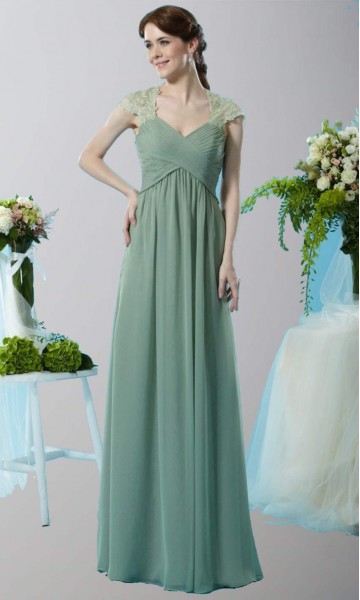
Empire Waist Bridesmaid Dresses for Petite Frames
An empire waist—sitting just below the bust—works magic on petite bridesmaids by creating the illusion of impossibly long legs. The eye draws upward to the highest point of the dress, and everything below appears elongated. This higher waistline effectively “borrows” length from the torso and adds it to the legs, creating better overall proportions for shorter frames.
For petite bridesmaids who might feel overwhelmed by a floor-length gown, the empire waist provides structure at the most flattering point while allowing the skirt to flow freely without looking heavy.
Natural Waist Styles for Tall Bridesmaids
A natural waist (at the smallest part of the torso) is equally forgiving across different heights. It defines the frame beautifully on taller women without creating the risk of the dress looking “too short” in the bodice—a common problem when tall bridesmaids wear empire waists.
For your entire bridal party, choosing either an empire or natural waistline and keeping it consistent creates that crucial cohesive element while being universally flattering. Both options work; the key is picking one and applying it across all your bridesmaid dresses for different heights.

Mismatched Bridesmaid Dresses: Neckline Variety, Hemline Unity
This is where modern bridesmaid styling gets really smart: the “mismatched top, unified bottom” trend. It’s the perfect compromise between individuality and cohesion, especially when you’re dealing with a bridal party of varied heights and body types.
Your bridesmaids have different torso lengths, shoulder widths, and bust lines. A halter that looks stunning on your tall, athletic friend might create an awkward proportion on your petite bridesmaid with a shorter neck. A deep V-neck that’s elegant on one person might feel uncomfortable on another.
The solution? Let them choose necklines that flatter their individual frames while keeping the skirt style and length absolutely identical. This approach gives each bridesmaid the comfort and confidence of wearing something that suits her body, while maintaining that crucial “line of color” and unified silhouette in your photos.
Popular neckline options for mix and match bridesmaid dresses include:
- V-neck: Elongates the neck and torso (great for petite bridesmaids)
- Halter: Shows off shoulders and arms (flattering on taller frames)
- One-shoulder: Creates asymmetry and visual interest
- Square neck: Modern and structured
- Sweetheart: Romantic and universally flattering
When you look at the overall effect, especially in group shots, the eye sees cohesion because the longest part of the dress—the skirt—remains consistent across the board. The varied necklines read as an intentional design choice rather than a styling compromise.
Bridesmaid Dress Alterations and Tailoring Costs: What to Expect
Time for some honest friend advice: floor-length bridesmaid dresses come with tailoring costs that you and your bridesmaids need to budget for. But understanding these costs upfront prevents surprises and frustration later. Let’s break down exactly what to expect.
Hemming Costs for Petite Bridesmaids
Petite bridesmaids will almost certainly need a significant hem. A standard floor-length gown is typically designed for someone around 5’7″ to 5’9″ in bare feet, which means your 5’2″ friend might need several inches taken up.
Typical hemming costs range from £40 to £100+ depending on several factors:
- Fabric type: Chiffon with multiple layers costs more than a single-layer crepe
- Lining: Each layer must be hemmed separately
- Embellishments: Beading, lace trim, or horsehair braid at the hem increases complexity
- Location: Tailoring costs vary significantly by region and whether you use the bridal salon or an independent seamstress
For the most budget-friendly alterations, order the bridesmaid dress length closest to what your petite bridesmaids need, then hem up. Never order too short thinking you’ll save on alterations—lengthening a dress is far more expensive and often impossible.
Ordering Extra Length for Tall Bridesmaids
Here’s what many brides don’t realize: your tall friends may need to order “extra length” directly from the designer to ensure the dress actually reaches the floor. Most bridesmaid dress designers offer this option (often for an additional £15-30), but it must be requested at the time of order. Without it, your 5’10” bridesmaid might end up with an unintentionally tea-length situation.
When ordering for tall bridesmaids:
- Always select “extra length” if available (typically adds 2-3 inches)
- Order early enough to allow for custom adjustments if needed
- Consider that tall bridesmaids in heels may need even more length
- Remember that it’s easier to hem up than let down
Understanding the Hollow-to-Hem Measurement
If you’ve ever ordered a “standard” size dress only to find it’s four inches too short for your tallest bridesmaid, you’ve met the enemy: standard sizing. To get that seamless, floor-skimming look across the whole group, your bridesmaids need to understand this specific measurement.
What is it?
The Hollow-to-Hem is the distance from the “hollow” of the neck (the indentation between the collarbones) down to the floor—or wherever the dress hem is intended to end.
Why it’s the “Height Fixer”
- For the Tall: Most designers have a standard length (usually around 58 to 60 inches). If your bridesmaid is 5’10” and wearing heels, she will likely need to order “Extra Length” (usually an additional 3–5 inches). Knowing her Hollow-to-Hem measurement tells the designer exactly how much fabric to add so the dress actually hits the floor.
- For the Petite: While you can’t “order less” fabric, knowing this measurement helps a seamstress understand the proportions. It ensures that if the dress has a specific detail—like a lace border or a high slit—it can be adjusted without ruining the design.
How to Measure Correctly
To get an accurate number, your bridesmaids shouldn’t just wing it with a hardware store tape measure. Share these three golden rules:
- Wear the Shoes: You must measure while wearing the exact shoes (or at least the exact heel height) you plan to wear on the wedding day. An extra two inches in height completely changes the math.
- Stand Up Straight: This sounds obvious, but looking down to see the measurement will shorten the front of the body. Have a friend do the measuring while the bridesmaid looks straight ahead.
- The “Sweep” Factor: For floor-length gowns, the tape should follow the natural curve of the body but fall straight to the floor, not tucked under the feet.
Writer’s Tip: Remind your readers that while “Extra Length” usually comes with an additional fee (often £20–£50), it is much cheaper than a seamstress trying to “extend” a dress that is too short!
Standard hollow-to-hem measurements:
- Petite (5’0″-5’3″): Usually 56-58 inches
- Average (5’4″-5’7″): Usually 58-60 inches
- Tall (5’8″-6’0″): Usually 60-63 inches or more
When ordering:
- Petite bridesmaids: Provide this measurement and expect hemming alterations
- Tall bridesmaids: Specifically request extra length if their hollow-to-hem exceeds standard measurements (usually anything over 60 inches)
- All bridesmaids: Factor these alteration costs into the total bridesmaid dress budget
Being upfront with your bridesmaids about these realities helps everyone plan their budgets accordingly and avoids the panic of a dress that’s five inches too long or frustratingly too short.

Photography Tips for Bridesmaids with Different Heights
Even with perfectly cohesive floor-length bridesmaid dresses, smart photography posing takes your bridal party photos from good to stunning. These strategic techniques help minimize height differences while creating editorial-worthy compositions.
Using Staircases to Balance Height Differences
If your venue has a staircase, use it strategically. This is perhaps the most effective photography trick for bridal parties with mixed heights. Position bridesmaids at different levels to naturally minimize height differences—your petite friends on the upper steps, taller ones below.
Suddenly everyone’s face is at roughly the same level, and the height variation looks like an intentional, editorial styling choice rather than an accident. The flowing floor-length skirts cascading down the stairs create a dramatic, elegant effect that works beautifully in both color and black-and-white photography.
Staircase posing tips:
- Place shorter bridesmaids 2-3 steps higher than taller ones
- Stagger the positioning rather than creating a straight diagonal line
- Have bridesmaids turn slightly toward each other for a more natural, conversational feel
- Use the staircase railing for variety in hand placement
Sitting and Standing Poses for Mixed-Height Groups
Ask your photographer to create dynamic compositions where some bridesmaids are seated while others stand. Have your tall bridesmaids sit on a low wall, vintage couch, or bench while petite friends stand beside them. This creates visual interest while cleverly addressing the height differential.
In the final photos, it looks like a deliberate artistic decision rather than a solution to a styling problem. The mix of levels adds dimension and keeps group shots from looking stiff or overly posed.
Sitting/standing combinations that work:
- Tall bridesmaids seated on ottoman or bench, petite bridesmaids standing behind
- Mix of seated and standing with the bride in the center
- Some bridesmaids sitting cross-legged on the floor (very editorial for outdoor shots)
- Tall bridesmaids kneeling beside standing petite bridesmaids
Camera Angles That Minimize Height Variation
A slight angle to the group (rather than a straight horizontal line) allows for natural variation in positioning that can accommodate different heights more gracefully. Your photographer should be comfortable with this technique, but it doesn’t hurt to mention it during your pre-wedding consultation.
Other camera angle strategies:
- Shooting from a slightly elevated position levels out height differences
- Tighter crops focusing on torsos and faces rather than full-body shots
- Natural clustering in groups of 2-3 rather than one long lineup
- Using depth and layers (some bridesmaids closer to camera, others further back)
The key is working with a photographer who understands these techniques and can implement them naturally without making your bridesmaids feel self-conscious about the posing.
Frequently Asked Questions About Bridesmaid Dresses for Different Heights
What length bridesmaid dress is best for mixed heights?
Floor-length bridesmaid dresses are ideal for bridal parties with mixed heights because they create a uniform hemline that focuses attention on color and silhouette rather than height differences. The consistent hem-to-floor measurement creates visual cohesion regardless of whether your bridesmaids are 5’2″ or 5’10”.
How much do bridesmaid dress alterations cost?
Hemming alterations for petite bridesmaids typically cost £40-£100+ depending on the fabric, number of layers, and regional pricing. Tall bridesmaids may need to order extra length from the designer for an additional £15-30 at the time of purchase. Always factor these alteration costs into your total bridesmaid dress budget.
What is the hollow-to-hem measurement?
The hollow-to-hem measurement runs from the collarbone’s hollow at the base of the neck straight down to where the dress hem should fall on the floor. It’s the standard measurement for ordering bridesmaid dresses in the correct length. Petite bridesmaids typically measure 56-58 inches, while tall bridesmaids often measure 60-63+ inches.
Can bridesmaids wear different necklines?
Yes! The mismatched bridesmaid dress trend allows different necklines while keeping skirt length and style identical, creating cohesion while flattering different body types. This “unified bottom, varied top” approach is perfect for accommodating tall and short bridesmaids with different torso proportions.
What’s the best fabric for bridesmaid dresses with height differences?
Chiffon and crepe are the best fabrics for bridal parties with mixed heights. Both create vertical lines that elongate petite frames without adding bulk, while draping elegantly on taller frames without looking stiff or imposing. Avoid heavily structured fabrics or horizontal patterns that emphasize height differences.
Should tall bridesmaids wear flats?
Tall bridesmaids can absolutely wear flats or low heels for comfort—that’s one of the major benefits of floor-length bridesmaid dresses. The long hem hides shoe choices completely, allowing each bridesmaid to adjust her height as needed without affecting the cohesive look of the group.
The Bottom Line on Cohesive Bridal Party Styling
Height differences in your bridal party aren’t a problem to solve—they’re simply a reality to style around. The floor-length bridesmaid dress, when chosen thoughtfully and tailored properly, becomes the unifying element that pulls everything together. Combined with smart fabric choices, a consistent waistline, personalized necklines, and strategic photography, you’ll create a bridal party that looks cohesive, elegant, and intentionally styled.
Your tall and petite bridesmaids will each feel beautiful in something that flatters their individual frame, and you’ll have wedding photos where everyone looks like they belong together. Which, of course, they do—because they’re the people you love most, standing beside you on your biggest day.
When you focus on the elements that create unity—that beautiful sweep of floor-length fabric, the coordinated color palette, and the consistent skirt silhouette—the height differences fade into the background. What remains is exactly what should be captured in your wedding photos: a group of women who love you, dressed beautifully, celebrating one of the most important moments of your life.
And really, that’s what the photos should capture anyway.
Ready to start shopping for bridesmaid dresses? Save this guide and share it with your bridesmaids so everyone understands the strategy behind your choices—and the importance of proper measurements and alterations for achieving that cohesive, polished look you’re dreaming of.
Related Post:
