
Quick Answer
Matching bridesmaid dresses suit couples who want a traditional, uniform look, smaller bridal parties, or venues where visual consistency matters most. Mismatched bridesmaid dresses suit couples with larger or more diverse bridal parties, or those who want a more relaxed, personalized, editorial look in photos. Neither is more “correct” for 2026/2027 weddings — most couples now land somewhere in between, using a coordinated color palette with varied silhouettes rather than choosing a strict either/or.
Are you having trouble picking your girls bridesmaid dresses online, can’t decide mismatched bridesmaid dresses or matching bridesmaid dresses? It’s a great debate as bridesmaid dresses are an extension of your wedding dress and wedding theme.
Why Matching vs Mismatched Bridesmaid Dresses Decision Feels Harder Than It Should
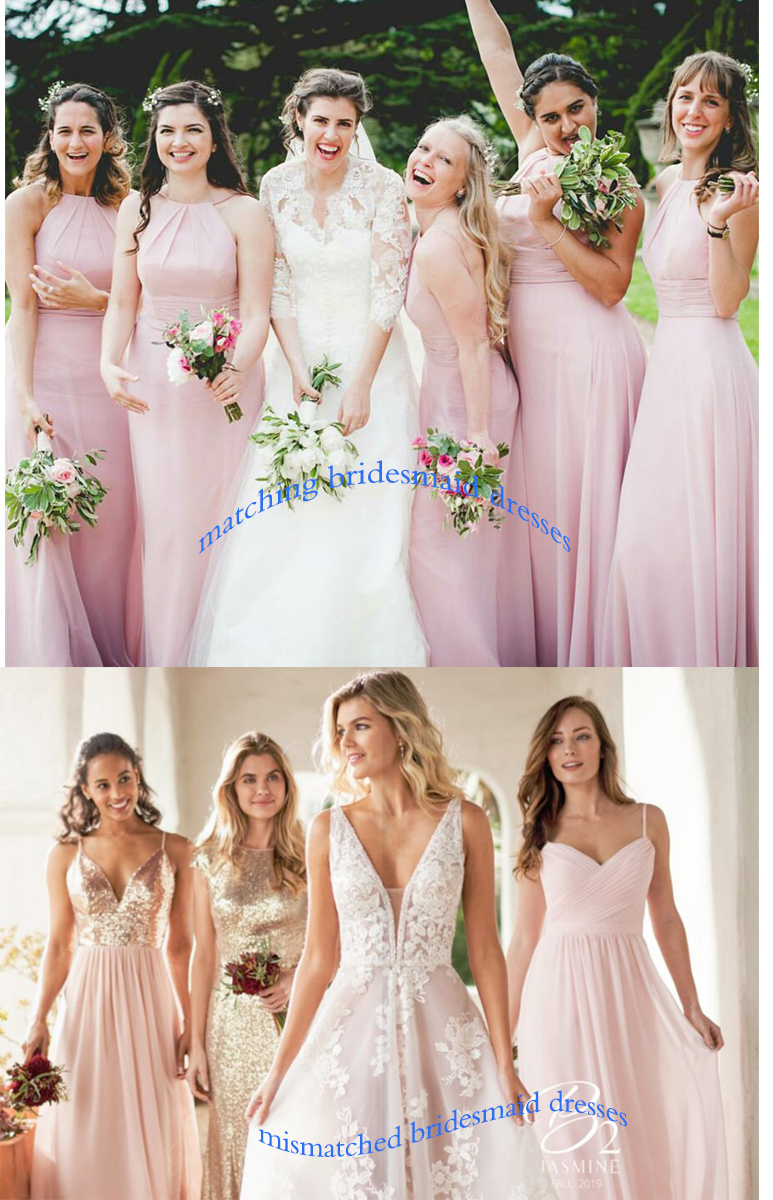
If you’re planning your bridal party’s look right now, you’ve probably noticed that this isn’t really a two-option decision anymore. It used to be simple: everyone wore the exact same dress, in the exact same color and fabric, and that was that. Today, “mismatched” itself has splintered into several different approaches, from fully varied colors and silhouettes to a single color worn in different dress styles. That’s part of what makes this decision feel more complicated than it should.
The good news is that the underlying question hasn’t actually changed. It still comes down to how much visual consistency you want across your bridal party, and how much flexibility you want to give your bridesmaids. Everything else, including the color palette, the silhouette, and the fabric, is really just a set of tools for executing whichever answer you land on.
SO, before you take the final leap into what the best to your big day, you need to know the Pros and Cons of these bridesmaid dress styles for wedding.
Matching Bridesmaid Dresses: What It Actually Means Today
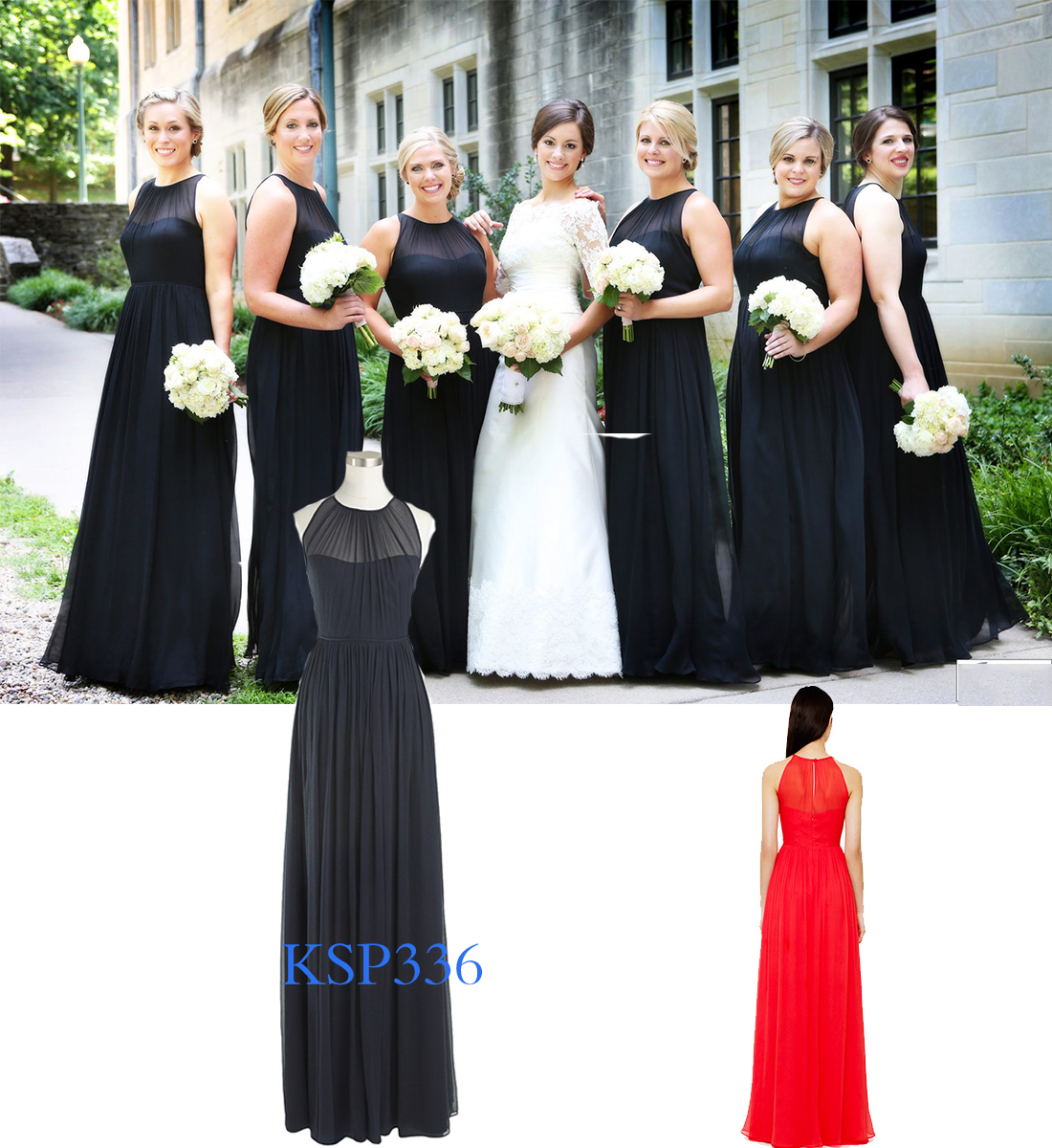
“Matching” still means bridesmaids wearing the same dress, but in practice, most couples now interpret this a little more loosely than the fully identical look of a decade ago. Same color, same fabric, but slightly different necklines or straps is now often still described as “matching,” since the overall effect at a glance is uniform.
Advantages of matching bridesmaid dresses
It is a tradition option, so if you are a traditional bride, if you are going to have classic, vintage or ceremonial wedding, then you may consider having your girls wearing the same style dress; It is easy to look coordinated and coherent with one-another into your big day;
- A cohesive, deliberate visual. There’s a reason matching has stayed a default option for so long: it reads instantly as coordinated, with no ambiguity about whether the look was intentional. For couples having a classic, formal, or religious ceremony, this consistency often suits the tone of the day.
- Simpler decision-making. Choosing one dress is, by definition, a smaller decision than choosing a palette and letting each bridesmaid pick within it. If you have a bridal party that’s spread across different cities, or bridesmaids who aren’t especially interested in being involved in the styling process, matching removes a layer of back-and-forth.
- The bride remains the visual focal point. A uniform bridal party creates a clear visual hierarchy in photos, with the bride’s dress standing apart by virtue of being the only different silhouette and color in the group.
- Cost tends to be more predictable. When everyone orders the same dress, it’s easier to compare pricing, order in bulk, and avoid the situation where one bridesmaid ends up spending significantly more than another for a different style.
Drawbacks of matching bridesmaid dresses
- One dress rarely flatters everyone equally. Body types, heights, and skin tones vary across any bridal party, and a single silhouette and color is, mathematically, unlikely to be the most flattering option for every person wearing it.
- Less room for personality. Some bridesmaids, particularly close friends or family who are heavily involved in the wedding, may want their outfit to feel like it reflects something about them individually, which a fully uniform look doesn’t allow for.
- Coordination can still be difficult in practice. Ironically, getting a full bridal party to agree on and order the exact same dress, in the same size availability, within the same timeframe, is often just as logistically demanding as coordinating a mismatched palette.

Click to order KSP385
Mismatched Bridesmaid Dresses: What It Actually Means Today
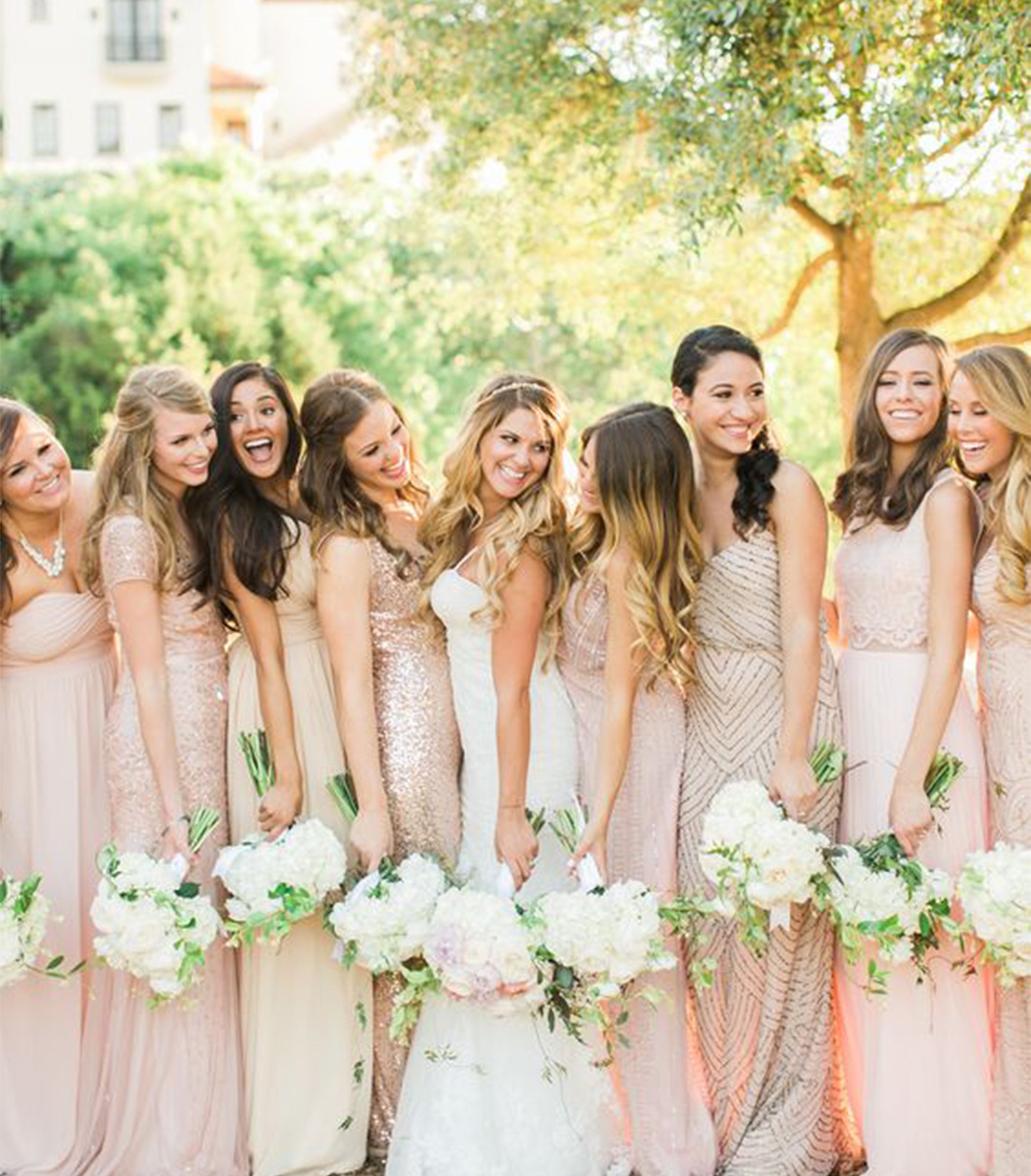
Mismatched bridesmaid dresses have become the more flexible term, covering everything from a fully varied palette (each bridesmaid in a different color) to a single color worn in different silhouettes, to a tonal palette where colors vary only slightly. It’s less a single style and more a spectrum, which is part of why it’s remained popular for several years running rather than fading as a passing trend.

Click to order KSP545
Thinking about whether you should go the route of mismatched bridesmaid dresses by compare Pros and Cons too;
Advantages of mismatched bridesmaid dresses
There is endless choice, it is easy to get unique wedding style; you can style your girls as you want, just focus on coordination;
- Genuinely more flattering across the group. Because each bridesmaid can choose (or be assigned) a color or silhouette suited to her, mismatched dressing tends to produce a bridal party where everyone looks confident, rather than one where the group looks coordinated but individuals look compromised.
- More flexibility with budget. When bridesmaids are choosing their own dress within a palette or set of guidelines, they naturally have more control over what they spend, compared to a single mandated dress with one price point.
- A more editorial, relaxed photo aesthetic. Wedding photography trends have shifted toward a softer, more natural look overall, and a mismatched bridal party tends to suit that aesthetic more than a strictly uniform one.
- Room to reflect the couple’s personality. A curated, slightly varied palette can feel more like an intentional style choice, similar to how a stylist would dress a group for an editorial shoot, rather than a dress code.
Cons of mismatched bridesmaid dresses
- It requires more upfront direction, not less. A common misconception is that mismatched dressing is the “easier” option because it removes the need to agree on one dress. In practice, it usually requires more guidance from the couple, not less, since bridesmaids need clear parameters (color palette, fabric, length) to avoid the group looking genuinely disorganized rather than intentionally varied.
- Harder to get right without a plan. Without a defined palette and some shared guidelines, mismatched dressing can tip from “curated” to “mismatched” in the literal, unflattering sense. This is the single biggest risk with this approach, and it’s almost always the result of too little direction rather than too much color variation.
- Can shift visual focus away from the couple. A highly varied, colorful bridal party can, in some cases, compete with the couple for visual attention in photos, particularly if the palette is bold or high-contrast.
Matching vs. Mismatched Bridesmaid Dress: Quick Comparison
| Factor | Matching | Mismatched |
|---|---|---|
| Best for bridal party size | Smaller, more uniform groups | Larger or more diverse groups |
| Flatters different body types | Lower | Higher |
| Planning effort required | Lower to moderate | Moderate to higher (needs clear guidelines) |
| Budget flexibility | Lower (one price point) | Higher (bridesmaids can choose within a range) |
| Best suited wedding style | Classic, formal, traditional | Modern, editorial, relaxed |
| Risk if poorly executed | Looks plain or dated | Looks disorganized |
How to Decide Matching or Mismatched Bridesmaid Drsses: Questions to Ask Yourself
How large is your bridal party? Smaller groups (two to three bridesmaids) tend to suit matching or a simple two-tone approach, since there’s less need to introduce variety to keep the look interesting. Larger groups (five or more) generally benefit from at least some variation, whether in shade, silhouette, or both.
How much do your bridesmaids’ body types and skin tones vary? If your bridal party spans a wide range of builds and undertones, a single dress style is statistically less likely to flatter everyone equally, which is one of the strongest practical arguments for a mismatched or tonal approach.
What’s the overall tone of your wedding? A formal, traditional, or religious ceremony often suits the visual consistency of matching dresses. A relaxed, modern, or outdoor wedding tends to suit the softer, more editorial look of mismatched dressing.
How involved do you want your bridesmaids to be in the decision? If you’d rather make one decision and have it apply to everyone, matching is the more efficient path. If you like the idea of giving your bridesmaids some ownership over their individual look, mismatched dressing, within clear guidelines, allows for that.
Do you already have a color palette in mind for the wedding overall? If your wedding already has a defined multi-color palette (in florals, linens, or décor), a single matching bridesmaid color can sometimes look disconnected from it. A tonal or coordinated mismatched palette often integrates more naturally.
Practical Guidelines of How to Make Coordniation Bridesmaid Dress Choice Work
If you’re going matching Bridesmaid Dresses:
Choose a universally flattering silhouette, such as an A-line dress, since it tends to suit the widest range of body types. Stay open to minor style requests from bridesmaids (like sleeve length or neckline) even within a matching dress, as small adjustments can meaningfully improve fit and confidence without disrupting the overall look.
If you’re going mismatched Bridesmaid Dresses:
Give bridesmaids specific, written guidelines rather than a vague direction like “wear whatever you like in blue.” Specify the color (ideally with a swatch or hex code), the fabric type, and an acceptable length range. Provide a visual reference, such as a mood board, so bridesmaids aren’t guessing at your intent. Use one unifying element, whether that’s a consistent fabric, a shared accessory, or matching bouquets, to tie the varied dresses together visually.
If you’re not sure matching or mismatched bridesmaid dress:
Consider a middle-ground option, such as one color in varied silhouettes, or a tight tonal palette (two or three closely related shades). This tends to capture much of the flexibility of mismatched dressing while retaining more of the visual cohesion of matching.
Matching vs Mismatched Bridesmaid Dresses Frequently Asked Questions
No. Matching bridesmaid dresses remain a popular, classic choice, particularly for formal or traditional weddings. What’s changed is that couples now have more options between fully matching and fully mismatched, rather than matching being seen as the only “safe” choice.
The easiest approach is to give bridesmaids a specific, limited color palette (usually two to four colors) along with a consistent fabric type, rather than a completely open-ended color range. This keeps the look coordinated while still allowing individual variation.
Not necessarily. Mismatched dressing often gives bridesmaids more control over their budget, since they can choose a dress within a wider price range, whereas matching dresses typically have one fixed price point for everyone.
Yes, and this is increasingly common. Many couples choose one color for all bridesmaids but allow varied silhouettes, or use a tight tonal palette that reads as coordinated while still offering some variation between individual dresses.
Matching, or a simple two-tone split, tends to work best for smaller bridal parties of two to three bridesmaids, since there’s less need to introduce color or style variation to keep the group visually interesting.
Bridesmaid Dress Styles for Wedding Final Thoughts
There’s no universally “right” answer between matching and mismatched bridesmaid dresses. The better question is which approach suits your bridal party’s size, your wedding’s overall tone, and how much visual consistency versus individual flexibility you want in your photos.
Many of the most successful bridal party looks for 2026/2027 weddings aren’t purely one or the other, but a considered middle ground: a shared color palette, a shared fabric, and just enough variation to let every bridesmaid look and feel her best.
Browse our high quality bridesmaid dress under 100 collection to find matching styles, coordinated palettes, and mismatched options suited to your bridal party.
If you want mismatched bridesmaid dresses, give your girls some direct specific guidelines like designer, fabric, color, dress length; a visual will make it easier for your bridesmaids to know what you are looking for. And also, I think if you are going to the mismatched route you should use accessories to tie their different looks together.
If you’re planning to have all of your ‘maids styled in the same look, pick a universally flattering silhouette, such as a strapped A-line dress; Be open to your girls’ ideas, ask them what they’d like to wear.
People Also Asked
Best Bridesmaid Dress Color Combinations for 2026/2027 Weddings
