
Choosing between a prom dress and a general formal dress can be surprisingly tricky! While they often sit side-by-side in a closet, the “vibe” and intent behind them are usually quite different.
You’ve got the date on the calendar and the “perfect look” dancing in your head, but then you hit the boutiques and realize the racks are divided. On one side, you have the shimmering, high-octane energy of prom dresses; on the other, the polished, timeless elegance of formal gowns. While they might both be floor-length and fabulous, choosing the wrong “vibe” can feel like showing up to a backyard BBQ in a tuxedo. Are you looking for a trend-setting moment that screams “Main Character,” or a sophisticated silhouette that will look just as stunning in photos ten years from now? Let’s dive into the nuances of fabric, flair, and etiquette to help you find the dress that doesn’t just fit—it makes the statement you’re looking for.
The Core Differences Between Prom Dresses and Formal Dresses
Let’s start with a quick-glance comparison. While the lines are blurring—especially as Gen Z redefines formal fashion—traditional distinctions still exist:
| Feature | Prom Dress | Formal/Evening Dress |
|---|---|---|
| Trendiness | High; follows current “Gen Z” or “Alpha” fads | Classic; focuses on timeless elegance |
| Design | Often features sequins, cut-outs, or bold colors | Typically more understated, sleek, or architectural |
| Fabric | Tulle, heavy satin, or iridescent materials | Silk, chiffon, velvet, or high-end crepe |
| Longevity | Usually a “one-and-done” statement piece | Designed to be worn to multiple galas or weddings |
Think of it this way: a prom dress is like the exclamation point at the end of your high school chapter, while a formal dress is the elegant comma you’ll use throughout your adult life.
Here is a breakdown of the three main pillars that separate the two:
1. The Design Philosophy: “Trend vs. Timeless”
The biggest divider is the inspiration behind the garment.
- Prom Dresses are heavily influenced by current pop culture, social media trends, and celebrity “red carpet” moments. Think high-voltage sparkle, neon colors, daring cut-outs, and asymmetrical hemlines. They are designed to capture the spirit of now.
- Formal Gowns lean into classic aesthetics. You’ll find more structured silhouettes, elegant necklines (like boat necks or cowls), and a focus on graceful movement. A formal gown is an investment piece meant to remain stylish for years, rather than just one season.
2. Fabric and Texture
The “feel” of the dress often reveals its category:
- The Prom Palette: Expect playful and high-contrast materials. Iridescent sequins, stiff tulle for “princess” volume, spandex blends for body-con fits, and glitter-embedded fabrics are the standard.
- The Formal Palette: These garments typically use “quiet luxury” fabrics. Think heavy crepe that drapes beautifully, rich velvets, delicate lace, or matte satin. The goal is a look that feels expensive and substantial under different lighting.
3. Detail and Embellishment
It’s all in the finishing touches:
- Prom: Embellishments are often bold and central—chunky rhinestones, floral appliqués, or beaded patterns that cover the entire bodice. The goal is a “wow” factor that stands out in a crowded ballroom.
- Formal: Details tend to be more subtle and integrated. You might see covered buttons, a hidden corset for structure, or a singular, dramatic element like a draped back or a sophisticated bow.
Quick Rule of Thumb: If the dress looks like it belongs on a TikTok transition video, it’s likely a Prom Dress. If it looks like it belongs at a gala at the Met or a black-tie wedding, it’s a Formal Gown.
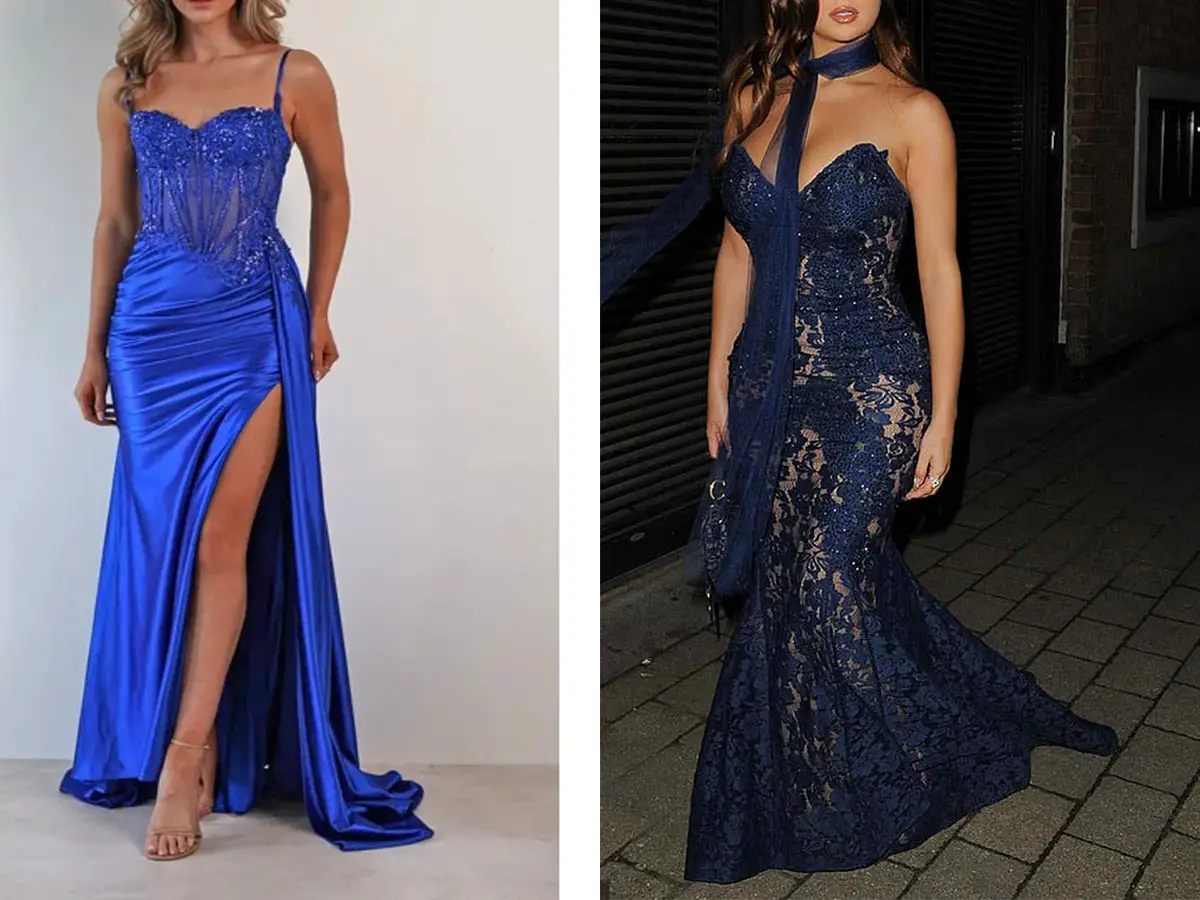
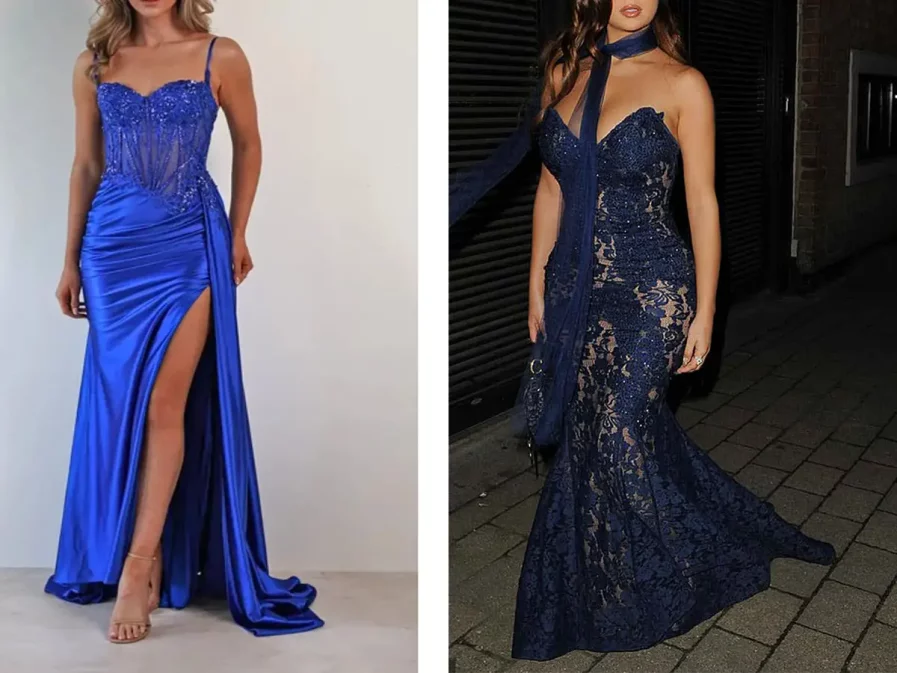
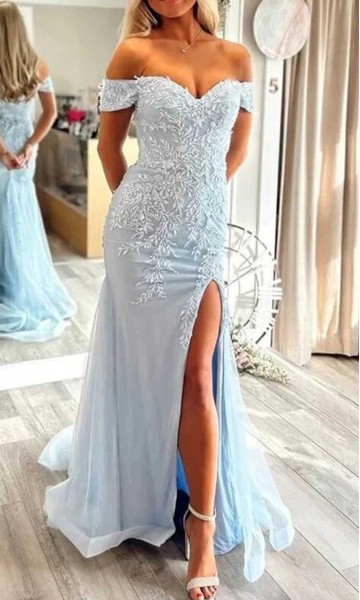
Check out details of electric blue sheath prom dress with slit / blue lace mermaid prom dress
When to Wear a Prom Dress vs a Formal Dress
Context is everything when it comes to formal wear. Each type of dress has its natural habitat, and understanding where each belongs will help you make the right choice.
The Prom Dress: Your Main Character Moment
It’s all about the “Main Character” energy. This is your moment to shine at a high-energy, once-in-a-lifetime school milestone. Prom is permission to be bold, dramatic, and unapologetically extra. You’re not just attending an event—you’re creating a memory that’ll live in photo albums and Instagram feeds for years to come.
Perfect occasions for prom dresses:
- High school prom (obviously!)
- Homecoming dances
- Sweet 16 parties
- Quinceañeras
- High school formal dances
The Formal Dress: Timeless Sophistication
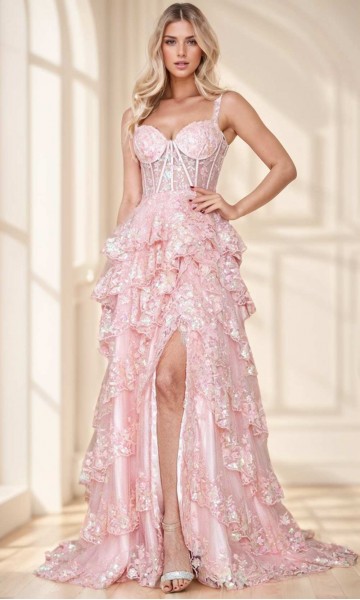
Think black-tie weddings, charity galas, or a fancy night at the opera. It’s about looking sophisticated and polished rather than being the loudest person in the room. The goal here is refined elegance that photographs beautifully but doesn’t scream for attention. You want people thinking “She looks stunning” rather than “Wow, that’s a lot of dress.”
Perfect occasions for formal dresses:
- Black-tie weddings
- Charity galas and fundraisers
- Award ceremonies
- Opera or theater premieres
- Formal corporate events
- Anniversary celebrations

Prom Dress vs Formal Dress: Style & Silhouette Guide
Visual cues matter when you’re shopping. Here’s what to look for in each category to help you identify the difference between prom dresses and formal dresses.
Popular Prom Dress Styles for 2026
- Ball Gowns: Voluminous skirts with fitted bodices that make you feel like royalty—perfect for that Cinderella moment.
- Mermaid Cuts: These dramatic silhouettes hug curves and flare at the knees, creating an hourglass shape that photographs beautifully.
- Two-Piece Sets: Modern and fashion-forward, showing a tasteful sliver of midriff for those who want something different.
- High Slits: Adding drama and leg-lengthening appeal, these are everywhere in 2026 prom fashion.
- Statement Details: Off-the-shoulder or cold-shoulder necklines, illusion panels, unexpected back designs, and bold embellishments.
Classic Formal Dress Silhouettes
- A-Line Gowns: The universally flattering silhouette that works for nearly every body type and occasion.
- Sheath Dresses: Clean, streamlined shapes that follow your natural silhouette without excessive volume.
- Floor-Length Wraps: Offering sophistication with graceful movement, these are elegant without trying too hard.
- Column Dresses: Minimalist gowns with architectural details that make a statement through simplicity.
- The Evening Black Dress: Think of it as the “Little Black Dress” but floor-length and evening-appropriate—a wardrobe essential.
- Elegant Design Elements: Cowl necks, tasteful draping, subtle beading, and refined construction details.
The key difference? Prom dresses tend to have more “moments”—those eye-catching details that make you go “wow.” Formal dresses earn their compliments through impeccable fit and timeless design.
Investment Guide: Prom Dress vs Formal Dress Costs
Let’s talk money, because choosing wisely between a prom dress or formal dress can impact your wallet for years to come.
Cost Per Wear: Which Dress Saves You Money?
A formal dress is often a better long-term investment because it doesn’t look “dated” as quickly as a trendy prom dress. That classic navy column gown? You’ll wear it to weddings throughout your twenties and thirties. That hot pink sequined mini with the asymmetrical hem? It might feel very “2026 prom” by next year.
Consider the cost-per-wear calculation: a £300 formal dress worn to five events over several years comes out to £60 per wear. A £300 prom dress worn once? That’s £300 per wear. Of course, if prom is your once-in-a-lifetime moment, that single wear might be worth every penny.
Price ranges to expect:
- Budget prom dresses: £100-£300
- Mid-range prom dresses: £300-£600
- Designer prom dresses: £600-£1,500+
- Budget formal dresses: £150-£400
- Mid-range formal dresses: £400-£800
- Designer formal dresses: £800-£3,000+
How to Resell Your Prom Dress After Prom Season
Here’s the silver lining for prom dress shoppers—prom dresses have a high resale market on apps like Poshmark, Depop, or Mercari immediately after prom season. Savvy shoppers can recoup 40-60% of their purchase price if they list quickly and the dress is in pristine condition.
Resale tips:
- List your dress within 2-3 weeks after prom
- Include multiple photos from different angles
- Mention the original brand and price
- Keep all tags and packaging
- Have the dress professionally cleaned before selling
Formal dresses, while more versatile, don’t have quite the same frenzied resale market since they’re not tied to a specific annual event. However, designer formal gowns in classic styles can hold their value well on luxury resale platforms.
How to Choose Between a Prom Dress and Formal Dress
Ready to make your decision? Here’s some actionable advice to guide you toward the perfect choice.
Decoding Dress Codes: Prom vs Black-Tie Events
A “Formal” or “Black-Tie” dress code usually allows for more subtlety and sophistication. You can opt for elegant simplicity without worrying you’re underdressed. “Prom,” however, is the time to go all out—this is where maximalism is not just accepted but celebrated.
Dress code decoder:
- “Prom” or “Semi-Formal”: Go bold! This is your permission to wear the statement dress.
- “Black-Tie”: Classic elegance; floor-length formal gowns are expected.
- “Black-Tie Optional”: Formal dresses work best; prom dresses might be too trendy.
- “Cocktail”: Neither prom nor formal—think shorter, dressier options.
- “Formal”: Formal evening gowns are the safest bet.
When in doubt, remember: you can always dress down a formal gown with simpler accessories, but you can’t easily dress up a prom dress for more conservative events.
How to Choose Between a Prom Dress and Formal Dress
Ready to make your decision? Here’s some actionable advice to guide you toward the perfect choice.
Decoding Dress Codes: Prom vs Black-Tie Events
A “Formal” or “Black-Tie” dress code usually allows for more subtlety and sophistication. You can opt for elegant simplicity without worrying you’re underdressed. “Prom,” however, is the time to go all out—this is where maximalism is not just accepted but celebrated.
Dress code decoder:
- “Prom” or “Semi-Formal”: Go bold! This is your permission to wear the statement dress.
- “Black-Tie”: Classic elegance; floor-length formal gowns are expected.
- “Black-Tie Optional”: Formal dresses work best; prom dresses might be too trendy.
- “Cocktail”: Neither prom nor formal—think shorter, dressier options.
- “Formal”: Formal evening gowns are the safest bet.
When in doubt, remember: you can always dress down a formal gown with simpler accessories, but you can’t easily dress up a prom dress for more conservative events.
Accessorizing Your Prom Dress vs Formal Gown
The accessory equation differs significantly between these two dress types.
Formal Dress Accessories: A formal dress can be “leveled up” with fine jewelry, a structured clutch, and classic pumps. The dress serves as a canvas for your personal style. Think:
- Diamond or pearl jewelry
- Metallic or satin clutches
- Classic pointed-toe heels
- Elegant wraps or shawls
- Understated hair accessories
Prom Dress Accessories: Prom dresses often rely on the dress itself to do the heavy lifting. Many prom dresses are so statement-making that you’ll want to keep accessories minimal—let that beaded bodice or dramatic train be the star. Consider:
- Fun, trendy jewelry
- Sparkly or embellished clutches
- Strappy heels or platform sandals
- Bold hair pieces or tiaras
- Dramatic false lashes
Consider Your Personal Style and Comfort
If you’re someone who loves being the center of attention, a show-stopping prom dress aligns with your personality. If you prefer quiet confidence and understated glamour, a formal dress will feel more authentically “you”—even at prom.
Ask yourself:
- Do I want to stand out or blend in elegantly?
- Will I feel comfortable in this dress all night?
- Does this reflect my personal style or just current trends?
- Can I move, dance, and sit comfortably?
Think About Your Photos
Both dresses will be photographed extensively, but prom photos tend to capture a specific moment in time, while formal event photos are meant to look timeless. Choose accordingly.
Prom photos are all about capturing the excitement and energy of youth—bold colors and trendy styles look perfect in these contexts. Formal event photos, especially wedding photos, should look elegant years from now when you’re reminiscing.
The Art of the Swap: How to Style Between Worlds
The beauty of modern fashion is that with the right accessories, you can completely shift the “age” and “occasion” of a dress. Whether you want to make a classic gown feel youthful or tone down a prom look for a gala, it’s all about the details.
Making a Formal Gown “Prom-Ready”
If you’ve fallen in love with a sleek, minimalist formal gown but worry it’s too serious for a high school dance, the goal is to add personality and playfulness:
- Bold Accessories: Swap out pearls for oversized hoops, colorful statement necklaces, or “Y2K-inspired” jewelry.
- The Shoe Factor: Instead of a conservative pump, opt for a platform heel or a sparkly, strappy sandal to add a younger edge.
- Glam Hair & Makeup: Since the dress is simple, go big on the beauty. A high ponytail, glitter eyeshadow, or a trendy graphic liner can instantly make a “serious” dress feel like a party look.
- Pop of Color: Add a vibrant clutch or a brightly colored faux-fur wrap to break up the monochromatic look of a traditional evening gown.
Making a Prom Dress “Gala-Appropriate”
If you’re trying to repurpose a prom dress for a black-tie event or a wedding, the goal is to edit and elevate:
- Simplify the Jewelry: If the dress is already heavy on sequins or beads, skip the necklace entirely. Opt for simple diamond (or CZ) studs and a clean cuff.
- Structured Layers: Throwing a well-tailored blazer over your shoulders can instantly “mature” a prom silhouette.
- Toned-Down Beauty: Choose a classic low bun or soft waves and a neutral makeup palette. This balances out the high-energy design of the dress.
- Neutral Footwear: Stick to a nude or metallic stiletto that blends in rather than competes with the dress’s embellishments.
The Secret Sauce: It’s all about the balance of energy. If the dress is “loud” (Prom), keep the styling “quiet.” If the dress is “quiet” (Formal), let your accessories do the shouting.
Frequently Asked Questions
What’s the main difference between a prom dress and a formal dress?
Prom dresses are trendy, statement pieces designed for high school proms with bold colors and embellishments. Formal dresses are timeless, elegant gowns suitable for multiple events like galas, weddings, and black-tie occasions. The key difference lies in longevity and versatility—prom dresses follow current fashion trends while formal dresses prioritize classic elegance.
Can you wear a prom dress to a formal event?
It depends on the dress and event. A classic, elegant prom dress can work for formal events, but very trendy or overly embellished prom dresses might look out of place at sophisticated occasions like black-tie weddings or corporate galas. If your prom dress has timeless elements and minimal trendy details, it could double as a formal gown.
Are formal dresses more expensive than prom dresses?
Not necessarily. Both can range from budget to luxury prices. However, formal dresses often offer better cost-per-wear value since they’re designed to be worn multiple times. A £400 formal dress worn to five events costs £80 per wear, while a £400 prom dress worn once costs £400 per wear.
How do I choose between a prom dress and a formal dress?
Consider the occasion, dress code, your personal style, and whether you’ll wear it again. Prom dresses are perfect for making a bold statement at prom and teen events, while formal dresses offer versatility for multiple adult occasions. If you’re building a long-term wardrobe, invest in a formal dress. If it’s a once-in-a-lifetime moment, splurge on the prom dress of your dreams.
What fabrics are best for prom dresses vs formal dresses?
Prom dresses typically feature tulle, heavy satin, organza, or iridescent materials that create volume and sparkle. Formal dresses use luxurious fabrics like silk, chiffon, velvet, or high-end crepe that drape elegantly and photograph beautifully. The fabric choice significantly impacts the overall look and longevity of the dress.
Can I wear a formal dress to prom?
Absolutely! If you prefer timeless elegance over trendy statements, a formal dress is a sophisticated choice for prom. You’ll stand out for your refined taste, and you’ll have a dress you can wear again to future events. Just make sure it feels special enough for your big night.
Final Thoughts: Prom Dress or Formal Dress?
At the end of the day, the “right” choice between a prom dress and formal dress depends on the occasion, your personal style, and how you want to be remembered. Prom dresses celebrate youth and the joy of standing out, while formal dresses honor timeless elegance and versatility.
Understanding the difference between prom dresses and formal dresses helps you make smarter shopping decisions, whether you’re planning for one magical night or building a wardrobe that will serve you for years to come.
And honestly? If you’re lucky enough to need both in your closet, you’re doing something right.
Ready to find your perfect dress for prom 2026? Consider the event, your budget, and most importantly—choose the dress that makes you feel absolutely amazing. That confidence will shine through in every photo and memory you create.
Related Post:
