
Choosing between chiffon and satin bridesmaid dresses might seem like a simple style decision—but for summer or outdoor weddings, it can make or break your bridesmaids’ comfort.
If you’re wondering:
- Which fabric is more breathable?
- Which one shows sweat?
- Which looks better in real wedding conditions?
This guide gives you a clear, honest answer—so you can choose confidently.
👉 For a full fabric breakdown, read: Which bridesmaid dress fabrics don’t show sweat or water stains
Quick Answer: Chiffon vs Satin for Hot Weather
🏆 Winner: Chiffon
- More breathable
- Less likely to show sweat
- More comfortable for long wear
- Better for outdoor weddings
⚠️ Satin:
- Looks elegant, but traps heat
- Shows sweat easily
- Best for indoor or cooler settings
What’s the Difference Between Chiffon and Satin?
What Is Chiffon? (Complete Fabric Guide for Bridesmaid Dresses)
Chiffon is a lightweight, sheer, and breathable fabric made using a loose, slightly twisted weave, which gives it its signature soft texture and airy drape.
It’s one of the most popular choices for summer bridesmaid dresses because it combines:
- Elegance
- Comfort
- Practical performance in heat
How Chiffon Is Made (Why It Performs So Well)
Chiffon is typically woven from:
- Polyester (most common for bridesmaid dresses)
- Silk (luxury version)
- Nylon (less common)
What makes chiffon unique is the twisted yarn construction, which creates:
- A slightly rough (not slippery) texture
- Tiny gaps between threads
- A semi-transparent finish
👉 This structure is the reason chiffon is: Breathable, Non-clingy, Forgiving in photos.
Key Characteristics of Chiffon
1. Lightweight & Airy (Critical for Hot Weather Weddings)
Chiffon is extremely lightweight, meaning:
- It doesn’t weigh the body down
- It allows continuous airflow
- It helps regulate body temperature
👉 In real wedding conditions:
- Bridesmaids feel cooler: Thanks to chiffon’s breathable, airy structure, heat doesn’t get trapped against the skin, allowing constant airflow that helps regulate body temperature even during outdoor ceremonies or long photo sessions.
- Less sweating builds up: Because the fabric allows moisture to evaporate quickly instead of trapping it, sweat is less likely to accumulate throughout the day, reducing both discomfort and visible damp areas.
- Comfort lasts for hours: The lightweight, non-cling nature of chiffon ensures that bridesmaids stay comfortable from the ceremony through the reception, without the heaviness, stickiness, or overheating that often comes with denser fabrics.
2. Matte or Soft-Textured Finish (Reduces Sweat Visibility)
Unlike satin or silk, chiffon has a non-reflective surface. This matters because:
- Shiny fabrics highlight moisture
- Matte fabrics diffuse light
With its matte or soft-textured surface, Sweat patches are far less noticeable, Photos look more consistent and Fabric appears dry even when slightly damp.
3. Non-Cling Structure (Doesn’t Stick When You Sweat)
One of chiffon’s biggest advantages: It floats away from the body instead of clinging to it
Because of its structure:
- It doesn’t stick to damp skin
- It doesn’t outline sweat areas
- It maintains a clean silhouette
This is especially important for the Back, Waist and Underarm areas of bridesmaid dresses.
4. Natural Movement (Built-In Cooling Effect)
Chiffon isn’t static—it moves constantly. As the wearer walks:
- The fabric shifts
- Air circulates
- Heat dissipates
👉 This creates a subtle but real cooling effect, which is why chiffon is ideal for: Outdoor ceremonies, Dancing and Long wedding timelines.
5. Layer-Friendly Without Overheating
Most chiffon dresses are Double-lined and Layered for opacity. But unlike heavier fabrics, layers don’t trap heat excessively, air still moves between them. This gives you Coverage, Structure, Breathability.
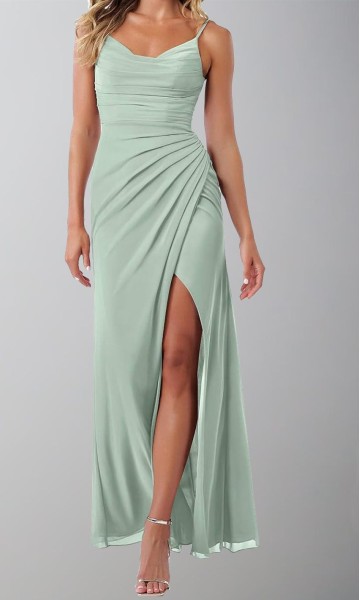
Why Chiffon Is the Best Fabric for Summer Bridesmaid Dresses
When you combine all its properties, chiffon solves the biggest real-world problems:
- Heat: Loose weave allows airflow;
- Sweat: Matte finish + non-cling structure hides moisture
- Comfort: Lightweight and flexible
- Photos: Soft drape looks flattering from every angle
Best Chiffon Dress Constructions (What to Look For)
Not all chiffon dresses perform equally—construction matters.
A-Line Chiffon Bridesmaid Dresses: Best for Outdoor Weddings
- Maximum airflow
- Doesn’t trap heat around legs
- Universally flattering
Sleeveless or Spaghetti Strap Chiffon Dress: Best for Hot Climates
- Reduces heat buildup at underarms
- Minimizes visible sweat areas
Layered or Pleated Chiffon Wedding Bridesmaid Dress
- Improves airflow
- Adds visual texture (hides sweat even better)
Chiffon Skirt + Structured Bodice: Best balance of comfort + shape
- Breathable lower half
- Supportive top
When Chiffon Might NOT Be Ideal
Even though chiffon is the safest choice, there are a few edge cases:
- Very Light Colors in Extreme Heat: Pale shades (e.g. blush, light grey), may show heavy sweat if soaked. Instead, choose slightly deeper tones or opt for layered chiffon.
- Very Windy Locations: Lightweight fabric may move excessively. Instead, choose slightly heavier chiffon Or multi-layer designs
What Is Satin? (Complete Fabric Guide for Bridesmaid Dresses)
Satin is a smooth, glossy fabric known for its luxurious shine and structured appearance, created using a tight weave and special finishing technique that produces its signature reflective surface.
It’s often chosen for bridesmaid dresses because it looks:
- Elegant
- Formal
- High-end in photos
However, in real wedding conditions—especially warm weather—satin behaves very differently than it looks in product images.
How Satin Is Made (Why It Looks Luxurious—but Feels Hot)
Satin isn’t actually a fiber—it’s a weaving technique.
It’s typically made from:
- Polyester (most common for bridesmaid dresses)
- Silk (luxury option)
- Acetate or blends
What defines satin is its satin weave structure, where:
- Threads float over multiple yarns
- The surface becomes ultra-smooth
- Light reflects evenly across the fabric
👉 This is what creates High shine, Sleek finish, “Luxury” visual appeal.
That same structure also means: The Trade-Off. Very little airflow, dense surface that traps heat, moisture sits on top of the fabric instead of diffusing. This is why satin often underperforms in hot or outdoor weddings.
Key Characteristics of Satin Fabric
1. High-Shine Surface (Beautiful—but Highlights Sweat)
Satin’s biggest selling point is also its biggest weakness. Because it reflects light:
- Any moisture creates contrast
- Sweat patches become darker and more visible
- Fabric appears uneven when damp
👉 In real satin wedding bridesmaid dress, Underarm sweat shows quickly, Back and waist areas become noticeable, Flash photography exaggerates the issue.
2. Dense Weave (Traps Heat Against the Body)
Satin is tightly woven, which means:
- Air cannot circulate easily
- Heat gets trapped between fabric and skin
- Body temperature rises faster
It Results Bridesmaids feel hotter sooner, Sweat production increases, and Discomfort builds over time.
3. Clingy When Damp (Accentuates Sweat Areas)
When satin gets slightly wet:
- It sticks to the skin
- It outlines body contours
- It highlights areas of moisture
👉 This is especially problematic for Lower back, Waist, Stomach and Underarms of satin bridesmaid dress.
4. Heavier Feel (Reduces All-Day Comfort)
Compared to chiffon or tulle, satin:
- Feels heavier on the body
- Has less natural movement
- Can feel restrictive during long wear
👉 After several hours with satin dress:
- Dresses feel warmer
- Movement feels less effortless
- Comfort decreases
5. Structured Appearance (Great for Style, Not Always Practical)
Satin holds shape well, which creates:
- Clean lines
- Sculpted silhouettes
- Polished, formal looks
👉 This is why satin is popular for: Fitted gowns, Minimalist styles, and Evening weddings.
Why Satin Struggles in Summer Weddings
When you combine all its properties, satin creates real-world challenges:
- Heat Retention: Dense weave = less airflow, leads to overheating;
- Sweat Visibility: Glossy surface = visible moisture, creates uneven appearance;
- Reduced Comfort Over Time: Heavy + clingy = uncomfortable wear, especially during long events;
- Photo Risk: Lighting + shine + sweat =Higher chance of visible imperfections;
When Satin Actually Works Well
To keep your content balanced (and trustworthy for SEO), it’s important to show when satin is a good choice.
- Indoor, Air-Conditioned Venues;
Temperature is controlled, Sweat is minimized, Fabric performs as intended. - Evening or Cooler-Season Weddings;
Less heat exposure, More comfort, Better wearability. - Short-Duration Events;
Less time for heat buildup, Lower risk of discomfort. - Structured or Formal Aesthetic;
If your priority is Clean lines, Sculpted silhouettes, Glossy, editorial look, Satin delivers visually.
Common Mistakes Brides Make with Satin
- Choosing Satin Based on Photos Alone
Studio images with Controlled lighting, No heat, No movement, but real weddings are very different. - Ignoring Climate
Satin may look fine—but in hot weather, it becomes uncomfortable quickly. - Choosing Tight Satin Silhouettes
Fitted satin dresses trap more heat, show more sweat, and restrict movement.
Better Alternatives to Satin
If you love satin’s look but want better performance:
- Matte Chiffon
Similar elegance, Much more breathable and Less sweat visibility. - Crepe
Smooth but not shiny, Structured yet breathable and More forgiving. - Lightweight Lace
Textured surface hides sweat and Breathable design
Shop Smarter for Summer Weddings
Avoid fabrics that look good but perform poorly.
👉 Start with breathable options: lightweight bridesmaid dresses for hot weather weddings
Breathability: Which Fabric Keeps Bridesmaids Cooler?
Chiffon: Designed for Airflow
Chiffon allows Constant air circulation, Heat to escape, Sweat to evaporate faster, This makes it the best breathable bridesmaid dress fabric for hot weather weddings.
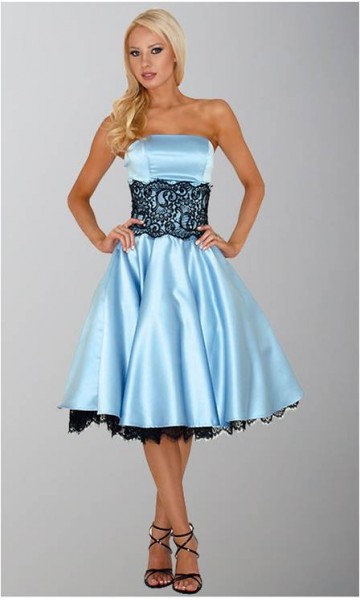
Satin: Traps Heat
Satin Has a dense weave, blocks airflow, holds heat against the body, results bridesmaids feel hotter faster, more sweating throughout the day.
Sweat Visibility: Which Fabric Hides Sweat Better?
Chiffon: Sweat-Friendly
Chiffon performs better because it:
- Doesn’t cling to damp skin
- Has a matte finish (reduces shine)
- Diffuses moisture visibility
Chiffon bridesmaid dresses ideal for Outdoor ceremonies, Summer photos, Long wedding days.
Satin: Shows Everything
Satin is one of the worst fabrics for sweat visibility.
Why?
- Reflective surface highlights moisture
- Dark patches become obvious
- Fabric sticks to the body when damp
👉 Especially problematic in Underarms, Back, Waistline.
Comfort: Which Fabric Feels Better All Day?
Chiffon: Lightweight and Easy to Wear
Bridesmaids love chiffon because it:
- Feels light on the skin
- Moves easily
- Stays comfortable for hours
Chiffon dress perfect for Standing, walking, dancing All-day long.
Satin: Heavy and Restrictive
Satin can feel:
- Warm and dense
- Sticky in humid weather
- Restrictive when moving
👉 After a few hours, discomfort becomes noticeable.
Style & Appearance: Which Looks Better in Real Weddings?
Chiffon: Effortless and Flowy
Chiffon creates Soft, romantic movement, Natural draping, and Light, airy silhouettes.
👉 Best chiffon dress styles:
- A-line dresses
- Flowy skirts
- Layered designs
Satin: Structured and Glossy
Satin offers Clean, structured lines, High-shine finish and More formal aesthetic.
👉 Best Satin Bridesmaid Dress Styles:
- Fitted gowns
- Minimalist silhouettes
Outdoor Weddings: Which Fabric Actually Works?
Chiffon (Best Choice)
Ideal for: Beach weddings, Garden weddings and Summer ceremonies. Because it is Breathable, Lightweight and Sweat-resistant.
👉 Browse: lightweight chiffon bridesmaid dresses for outdoor weddings
Satin (Risky Choice)
Only suitable for Indoor venues, Air-conditioned spaces, Evening weddings.
Cost vs Value: Is Satin Worth It?
Satin often looks more “expensive”—but 👉 Value isn’t just about appearance.
Satin or not, Consider these:
- Comfort for 6–10 hours
- Sweat visibility in photos
- Overall wearability
👉 In hot weather, chiffon delivers better real-world value.
Fabric Comparison Table
| Feature | Chiffon ⭐ | Satin ❌ |
|---|---|---|
| Breathability | ⭐⭐⭐⭐ | ⭐⭐ |
| Sweat Visibility | ⭐ Low | ❌ High |
| Comfort | ⭐⭐⭐⭐ | ⭐⭐ |
| Movement | Flowy | Structured |
| Best Setting | Outdoor | Indoor |
When Should You Choose Satin?
To be fair—satin isn’t always wrong.
Choose satin if:
- The wedding is indoors
- The venue is air-conditioned
- You want a sleek, structured look
👉 Otherwise, chiffon is the safer choice.
Final Verdict: Chiffon vs Satin Bridesmaid Dresses
If your wedding is in hot weather, the answer is clear: 👉 Choose chiffon over satin
You’ll get:
- Cooler, more comfortable bridesmaids
- Better-looking photos
- Less stress about sweat and stains
FAQs: Chiffon vs Satin Bridesmaid Dresses
Yes. Chiffon is more breathable, lightweight, and less likely to show sweat.
Yes. Satin’s shiny surface makes sweat patches very visible.
In most cases, yes—especially in warm or humid weather.
Chiffon is the best alternative, followed by crepe and lace.
